“Ugly, Dirty and Bad.”
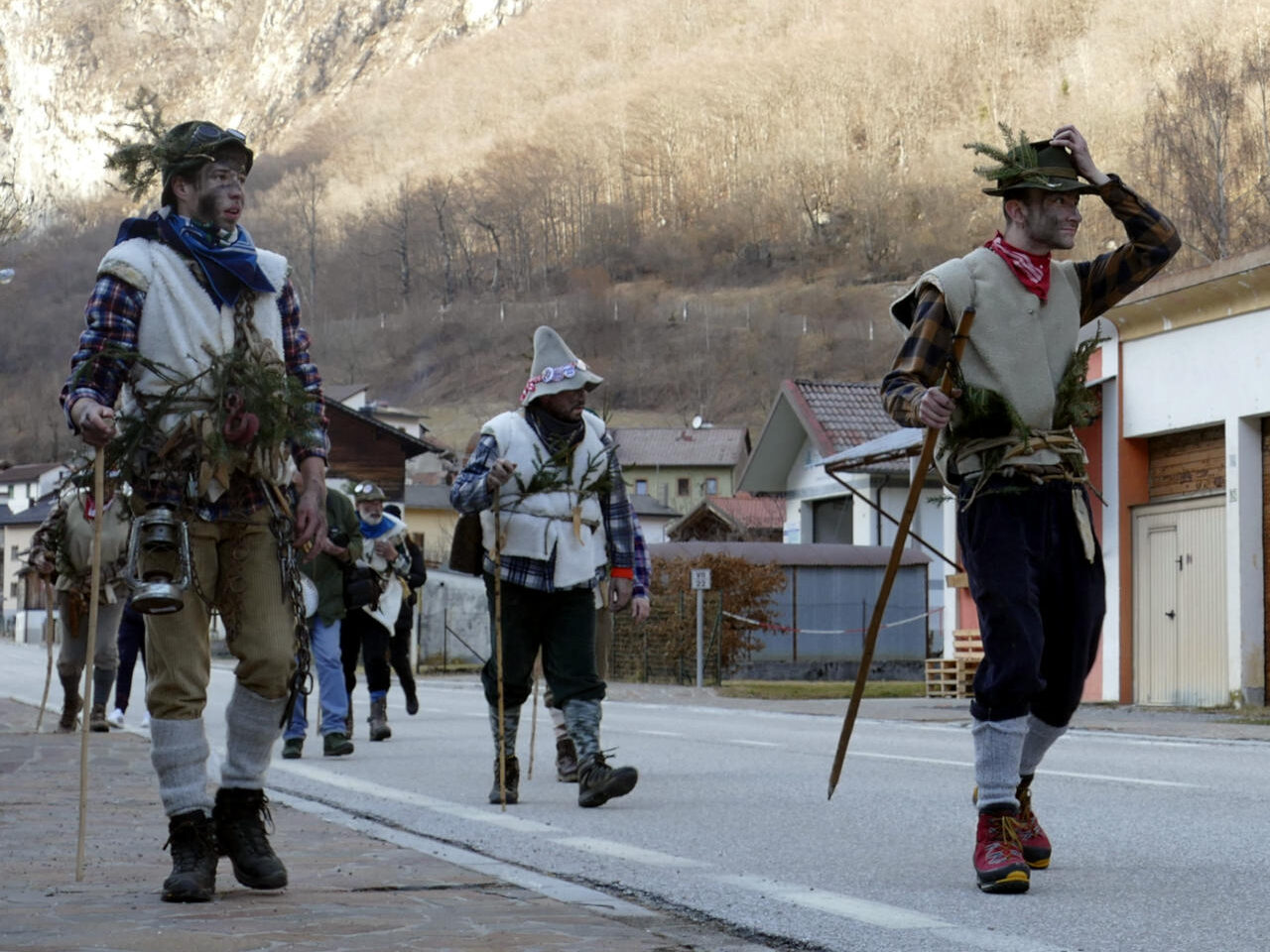
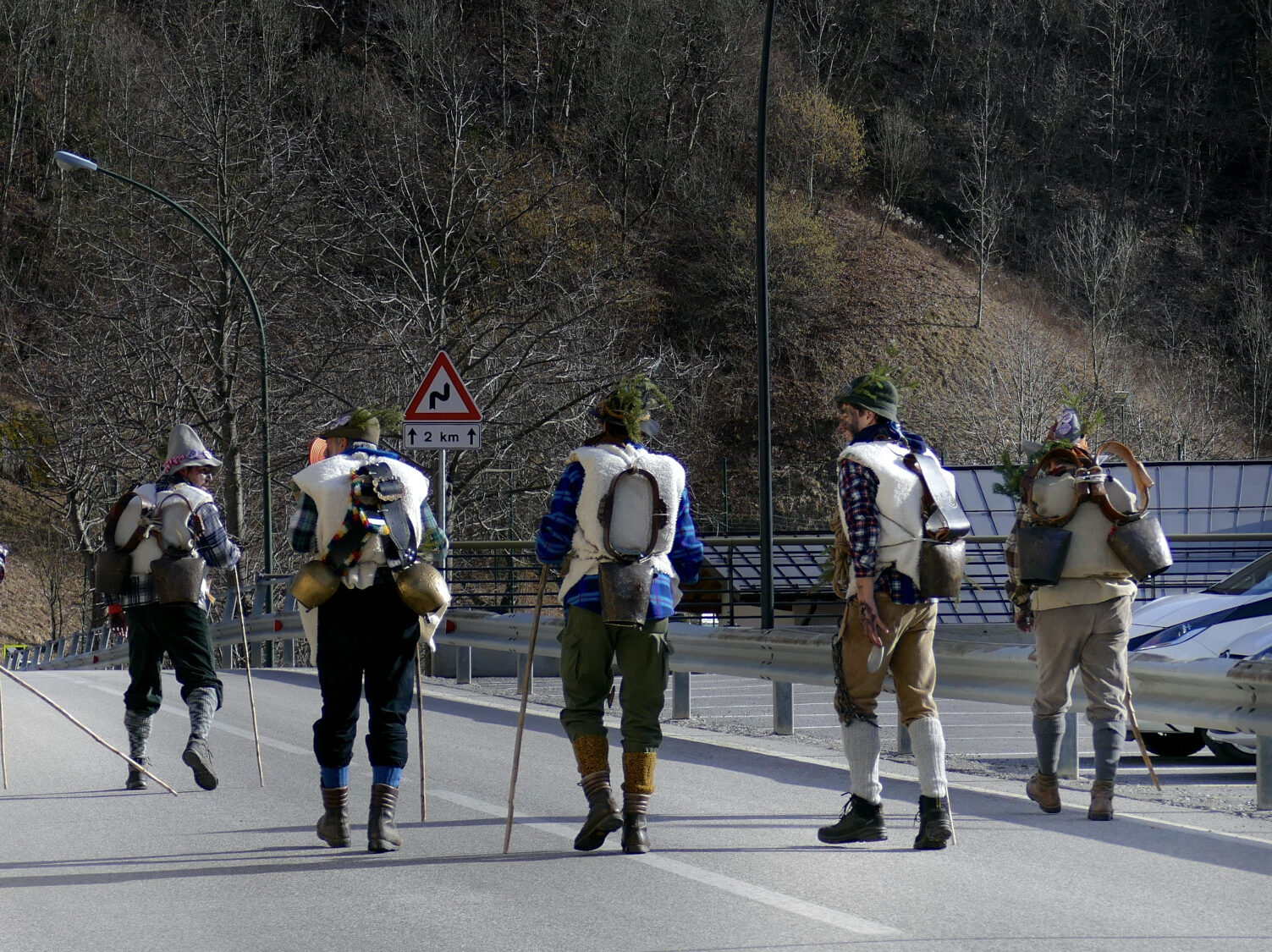
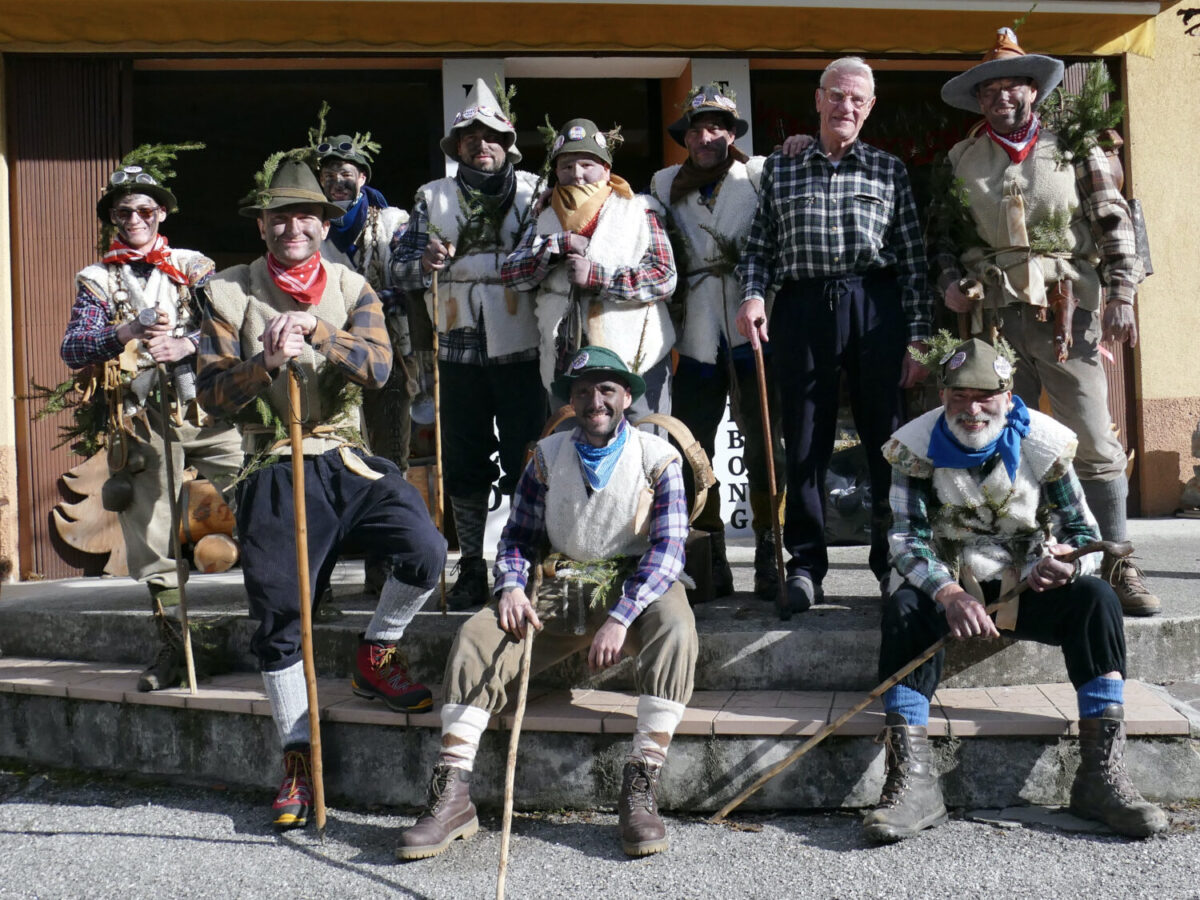
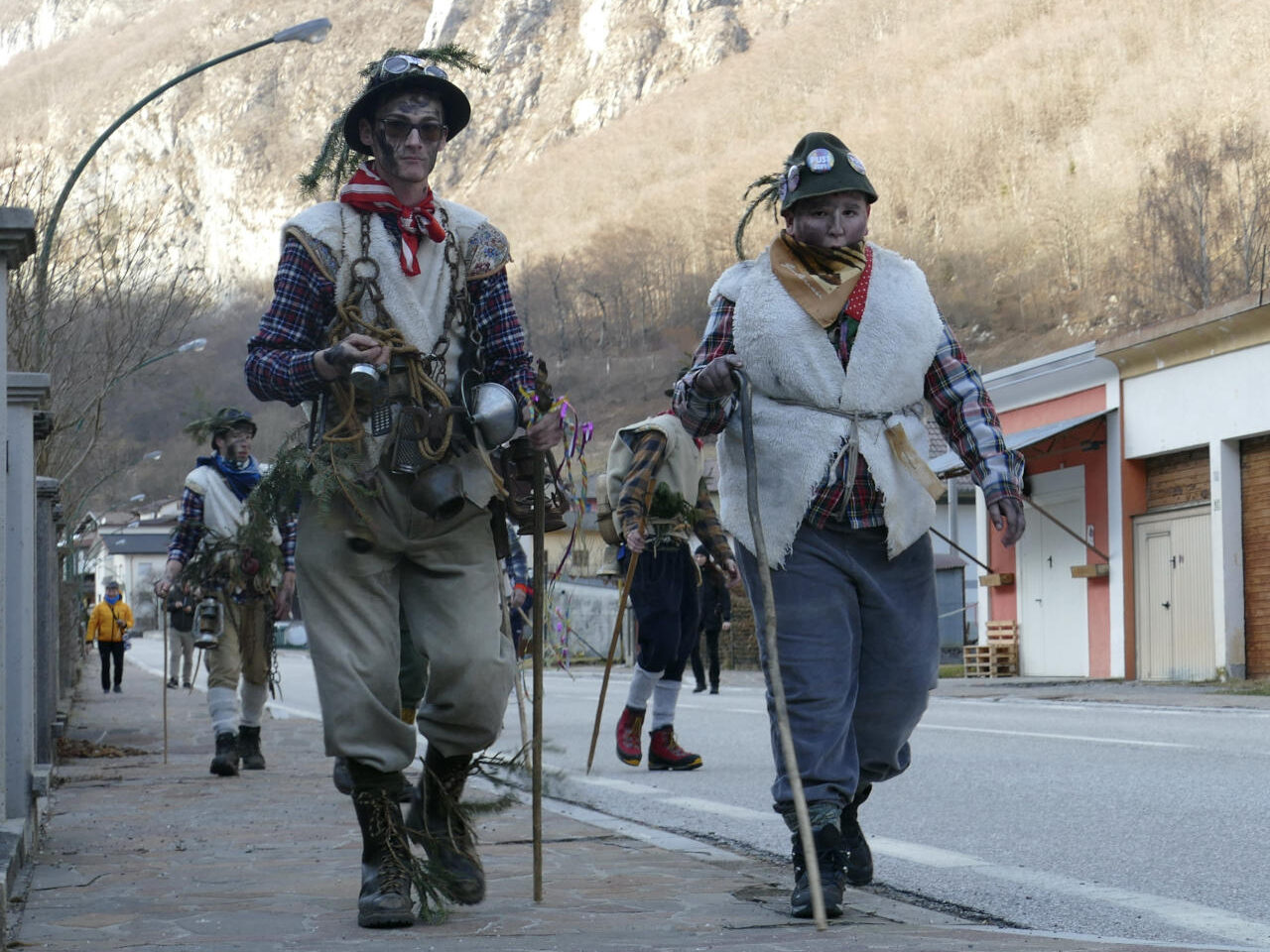
During the carnival in Timau, the Maskars scamper through the village carrying cowbells of various sizes tied to them, shaking them and causing a great din. Their din can be heard from afar, and from that you can tell whether they are approaching or receding.
Their faces and hands are dyed black with soot, and they wear pieces of pork rinds on their belts with which they try to soil anyone who happens to be within range. At one time perhaps the children would run away from the terrified Maskars, today it is a big party for everyone and definitely a showstopper.
At the end of the day, the advice is to gather in the local bar to cheerfully spend time with villagers listening and exchanging anecdotes and stories about the carnival and its ancient traditions.
Cowbells
The cowbells that are tied on are the ones usually placed around the neck of cows during the months of mountain pasture. Their sound taken individually is not much, we can say. It is rough, ungainly. From a distance, though, one gets a better appreciation of it.
The din of the group running, scampering and shouting echoes throughout the valley, and it is possible to catch it along with the entire panorama by standing a little distance away. A good listening point, for example, is on the other side of the But stream, from where one enjoys the perspective of the entire village echoing back from the mountains above.
Sticks and cloven hooves
As the Maskars travel along the stretch of highway that runs alongside the creek they strike the guard-rail with their sticks, creating a deep sound that propagates along the metal snake.
Another sound of the Maskars is the sound of boots pounding on the wooden bridge leading to the charnel house. In the past, traditional, heavy, hobnailed clogs were used; someone even remembers the sound of them in the streets and lanes, although they are no longer used today, much to the delight of the feet.
A safe listening point
For those who want an original listening experience, the suggestion is to enter the small church in the center of the village, around which the Maskars make several rounds, to listen to the sounds of cowbells, whistles and shouts mellowed and spatialized by the reverberation of the church, in a rather unreal atmosphere of isolation for one of the most important days of carnival festivities.
What about the church of Christ the King?
We were left with a curiosity about the acoustics of the Church of Christ the King, which from its imposing size and interior furnishings would seem to have a truly remarkable reverberation. Unfortunately, when we were there it was closed and we were told that it is open only on special occasions, but we will make another visit.
Directions
WHERE
Timau (Tischelwang in Standard German, Tischlbong in Timavese German dialect, Tamau in Friulian) is located in the municipality of Paluzza, in the province of Udine.
WHEN
During the carnival. Check with the Pro Loco for the actual date of the parade as it changes every year.
ACCESSIBILITY
One arrives by car or bus, passing through Tolmezzo. The main roads in the village are easily accessible; the internal routes are not.
Audio
Binaural audio, headphone listening recommended.
Please note: no recording no matter how technically advanced can ever represent the experience of real listening. Topofonie.it is not an archive of sounds, but an invitation to go and listen with our own ears to the world around us. The files given here are for illustrative purposes only.


Links and insights
- Cowbells and rattles are present in the carnival of so many cultures. We will soon cover the Pustje of Rodda and the Blumari of Montefosca, who during the festival run around wearing the traditional costume with cowbells tied on their backs to awaken spring. But the theme can take us far afield, to the Mamuthones in Sardinia, or the Kurenti in Slovenia.
- Timau has just under 350 inhabitants and is a German language island where a distinctive Carinthian dialect has been spoken since the Middle Ages.
- The Church of Christ the King in Timau houses one of the most impressive wooden crucifixes in Europe. The work of master sculptors from Val Gardena, it reaches a height of 12 meters and weighs about 30 quintals.