A world record
To begin with, the Giant Cave, located in the Trieste Karst, is the world’s largest single-chamber tourist cave. This alone would be enough to entice a visit. It goes without saying that in such a space, the acoustics are also record-breaking.
Outside and inside
Just a few steps downward. Already after the first ramps, you realize that something has changed. The sounds are muffled, as if you had entered a small living room with velvet-lined walls.
Suddenly the outside no longer exists.
The noise of the highway in the distance, the singing of birds, the wind through the leaves of trees, all the sounds of the surface world have disappeared and a sensation of “interior,” of intimacy prevails. If you’re lucky enough to be in a discreet and not too large group of visitors, the effect is noticeable and the sensation is such that voices lower and a sense of awe is created, of respect, as toward a sacred place.
The concert of water drops
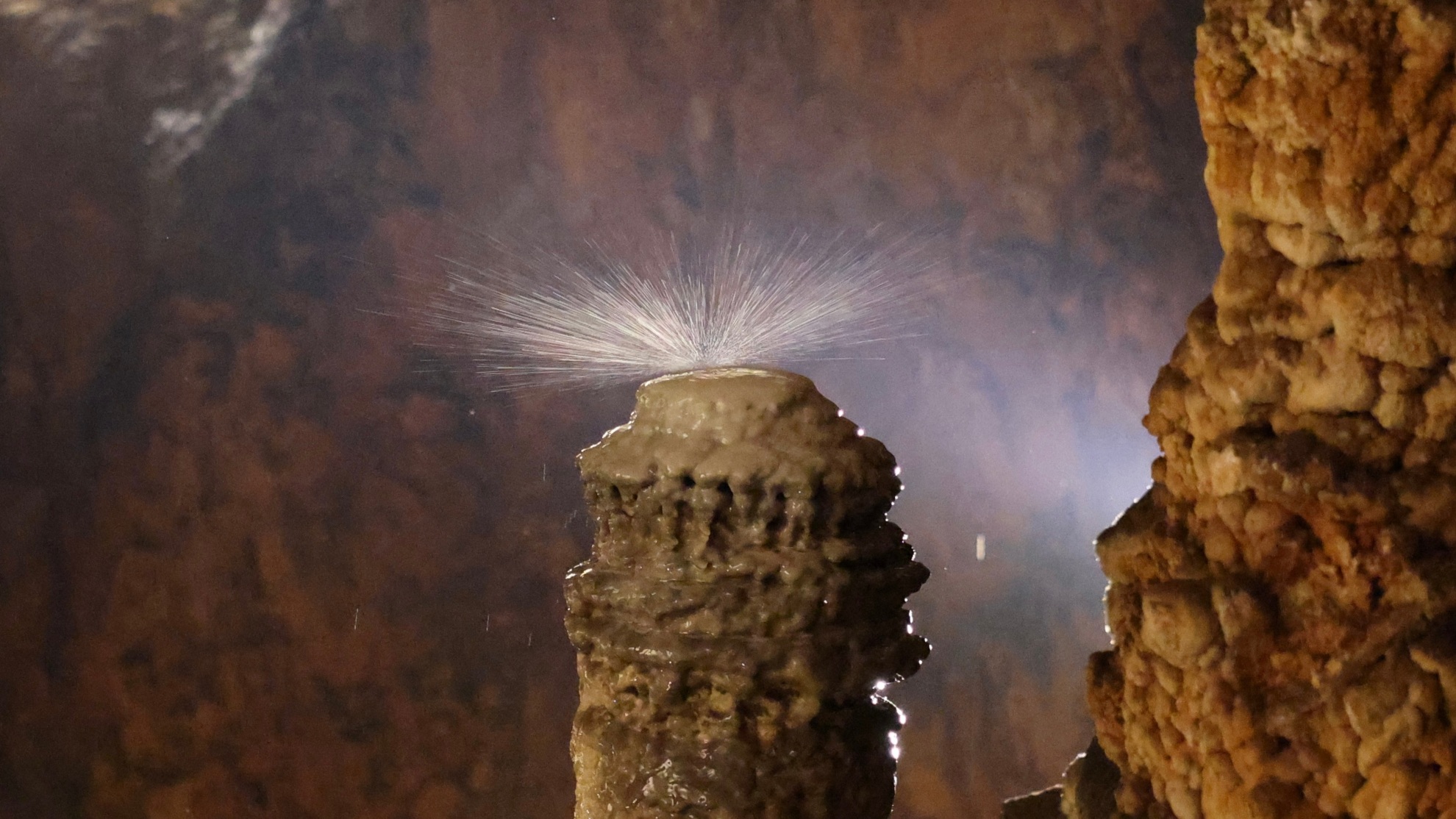
If it has rained in the previous days, in this section and along the entire first descent you can hear the water drops, which falling on the metal railings sound in many different ways. Depending on the timing and locations of precipitation, the “water drop concert” can be sparse, placid, or very sustained. The “notes” have a small musical tail if the drop hits the right spot on the railing, or they can be dry, very brief and more or less sharp if they fall on a stalagmite or on concrete or on our jackets. And they are not only distributed on the horizon, but also above and below, and they are near and distant, giving a pleasant and relaxing sensation.
The sound in this first section is still quite muffled, the drops can be heard clearly, there’s no particular reverberation. Until…
Suddenly it opens up.
An underground cathedral
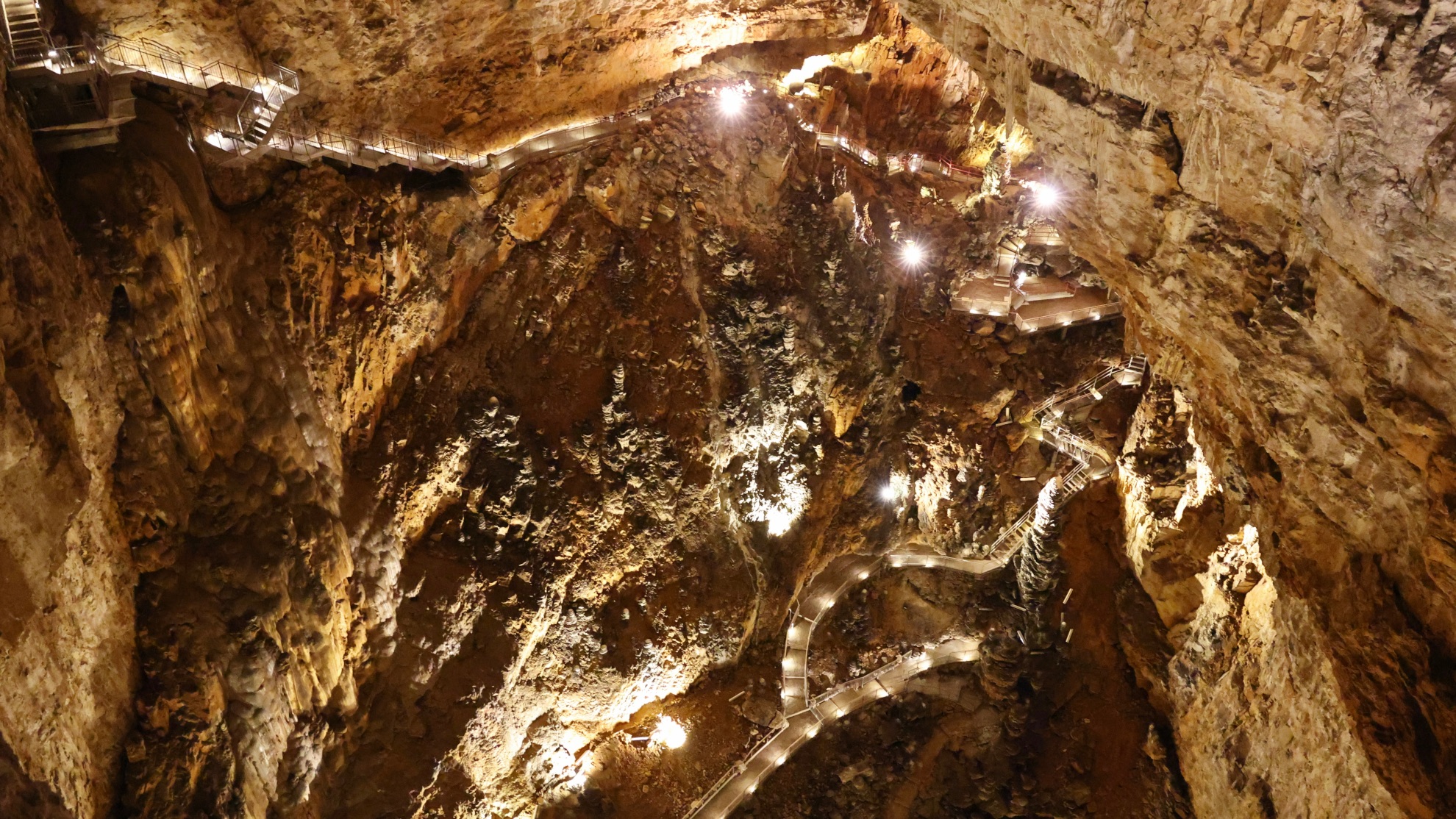
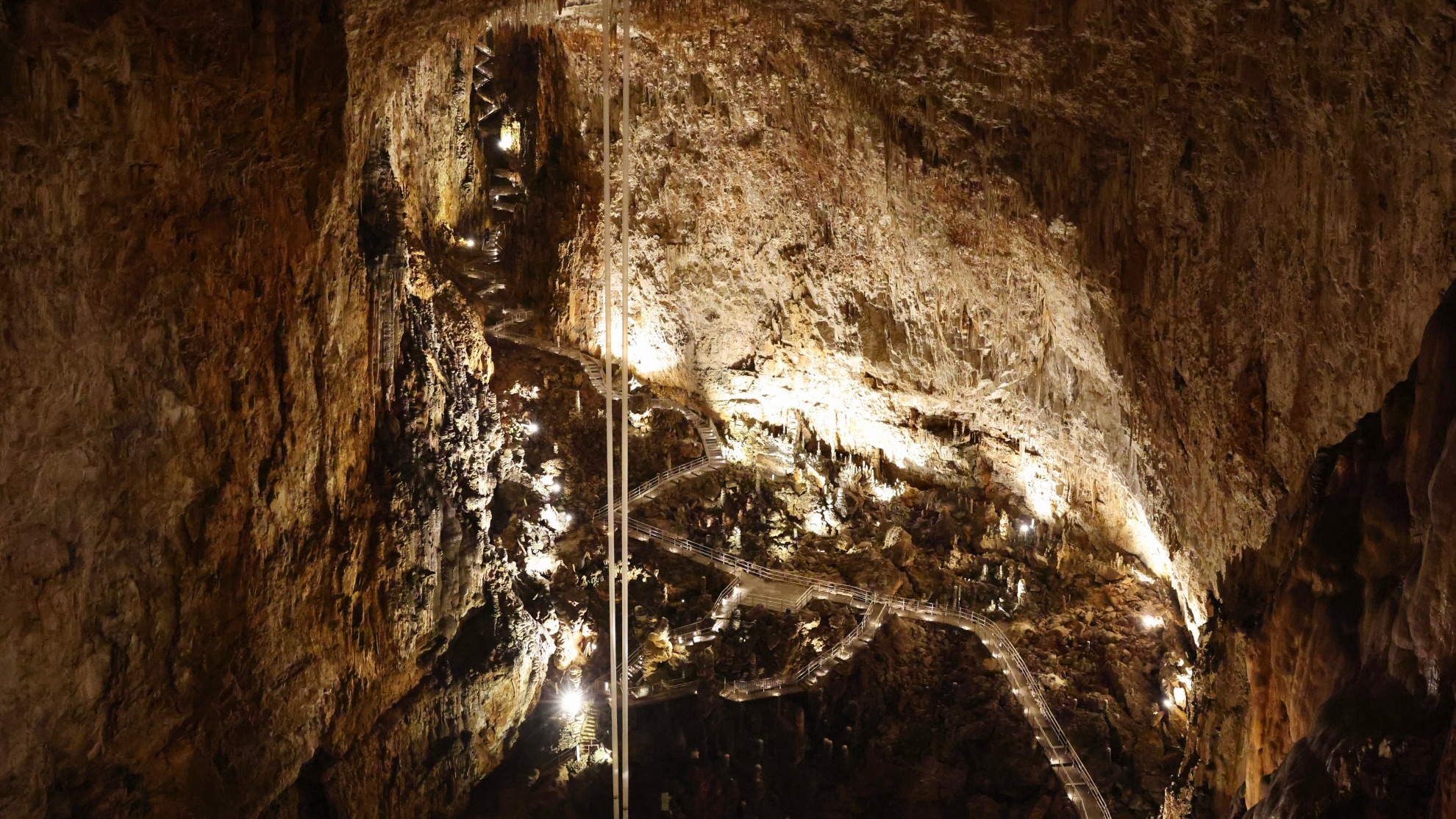
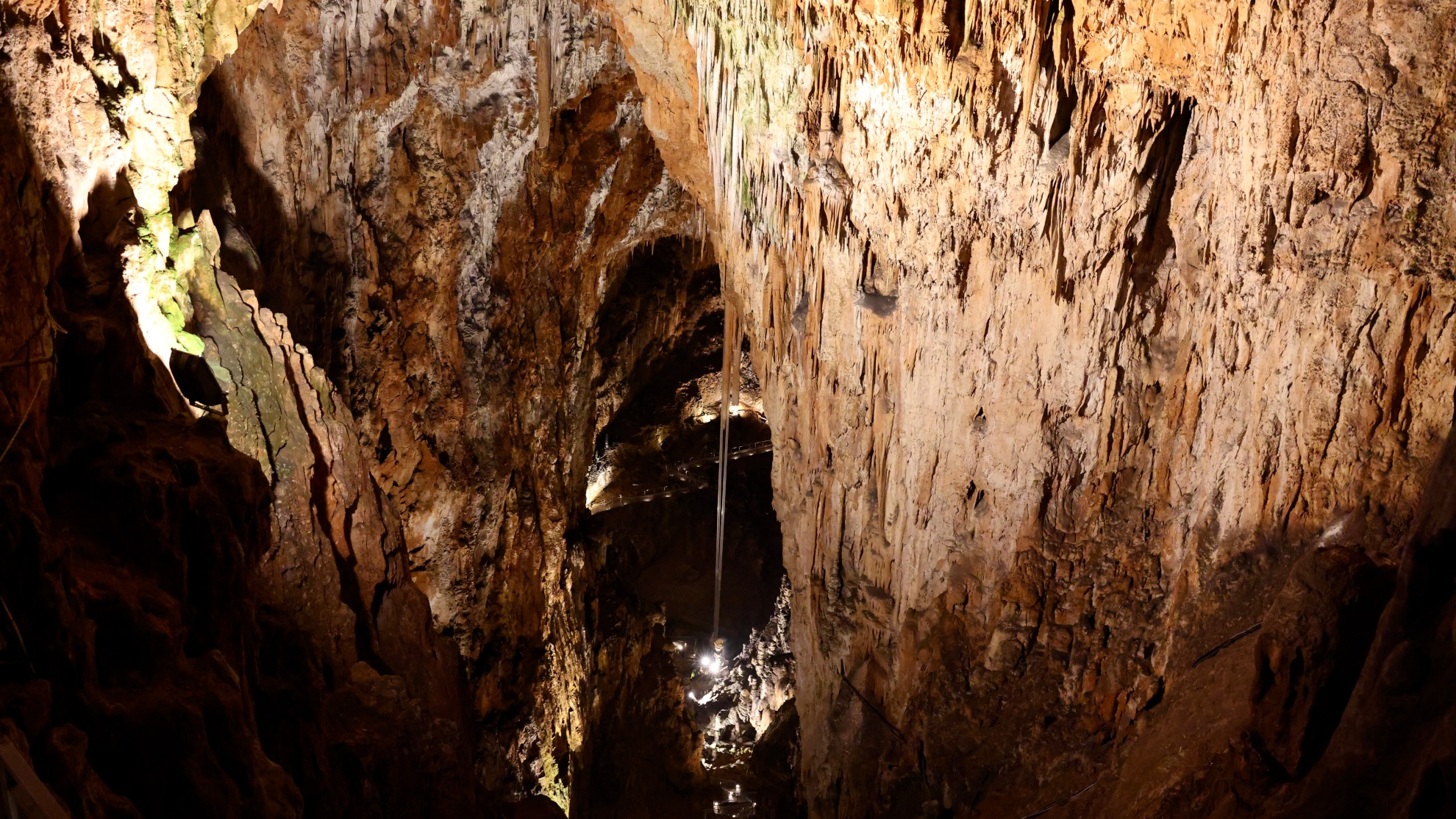
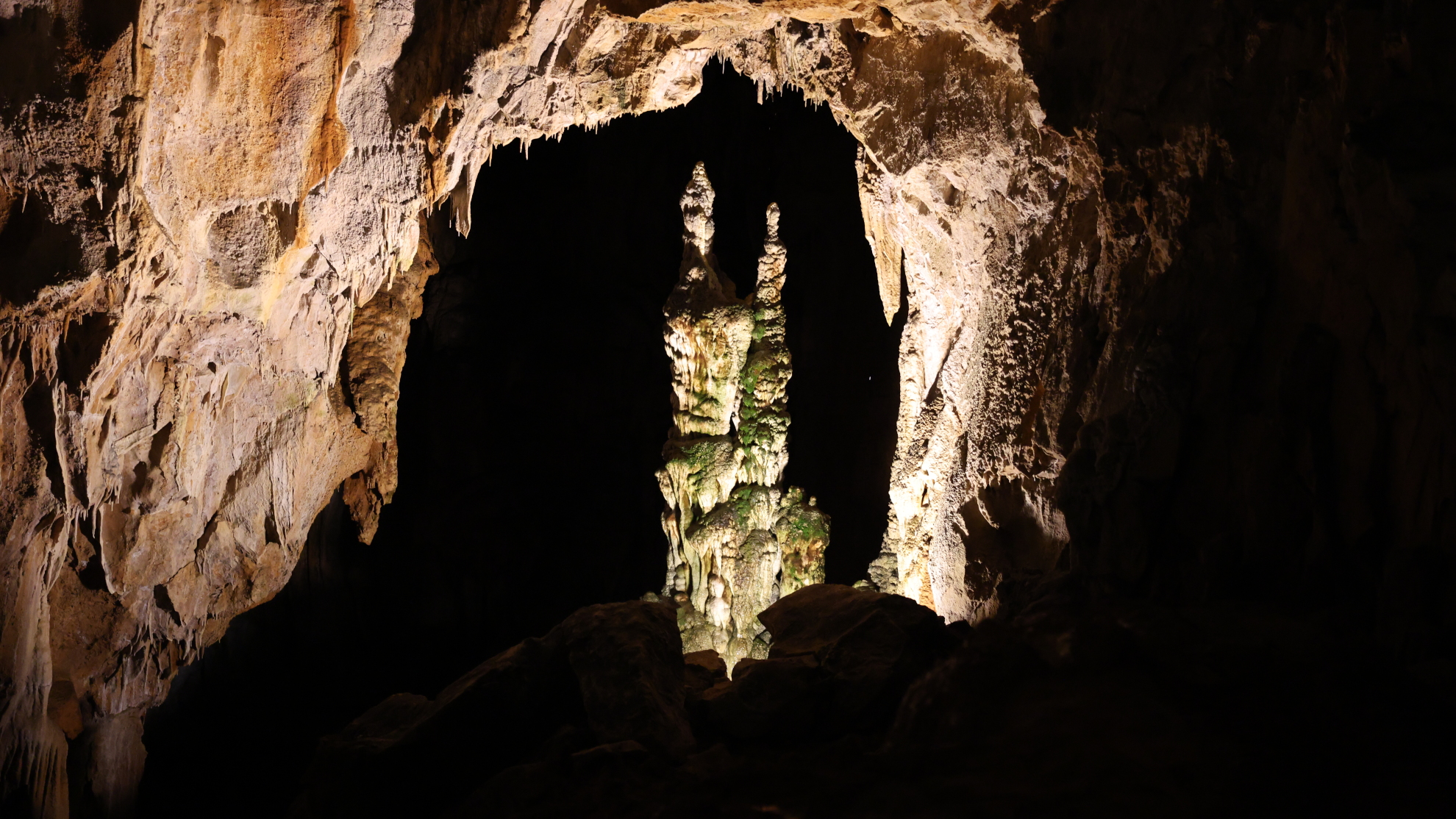
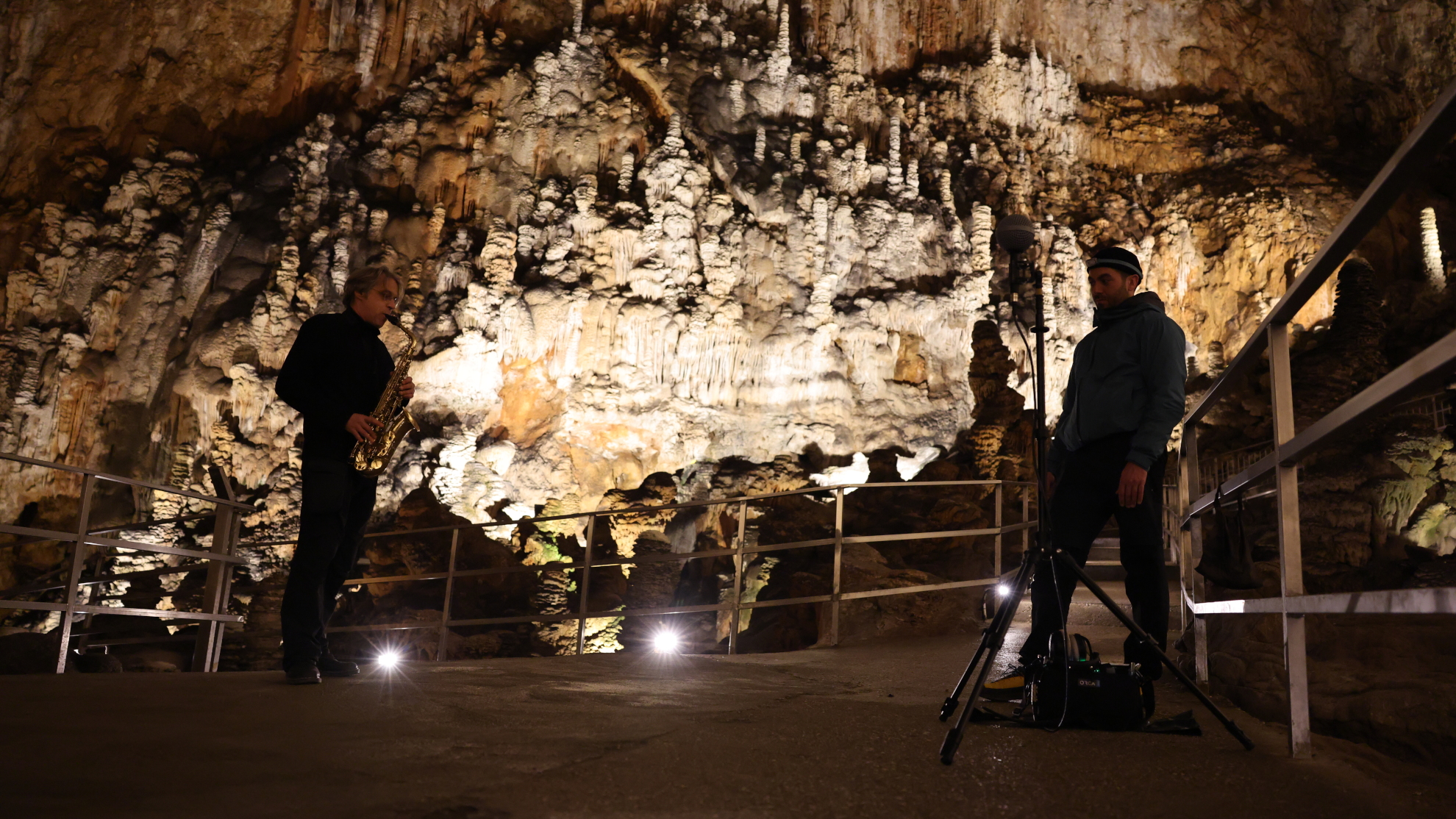
An underground cathedral presents itself to the eyes and there’s no photograph or recording that can convey the idea. The acoustics have also completely changed, opening up to fill the entire surrounding space. It’s practically impossible to resist making some sound to hear its echo.
After a few steps you reach the center of the hall.
If there’s water, the acoustic panorama is total, the drops are everywhere within a radius of seventy meters and a height of over one hundred. They sound very differently depending on whether they fall on the light fixtures (this is a bit ugly, it must be said. Some work could be done on this) on the railings or on the roof of the geophysical station visible at the base of the cave.
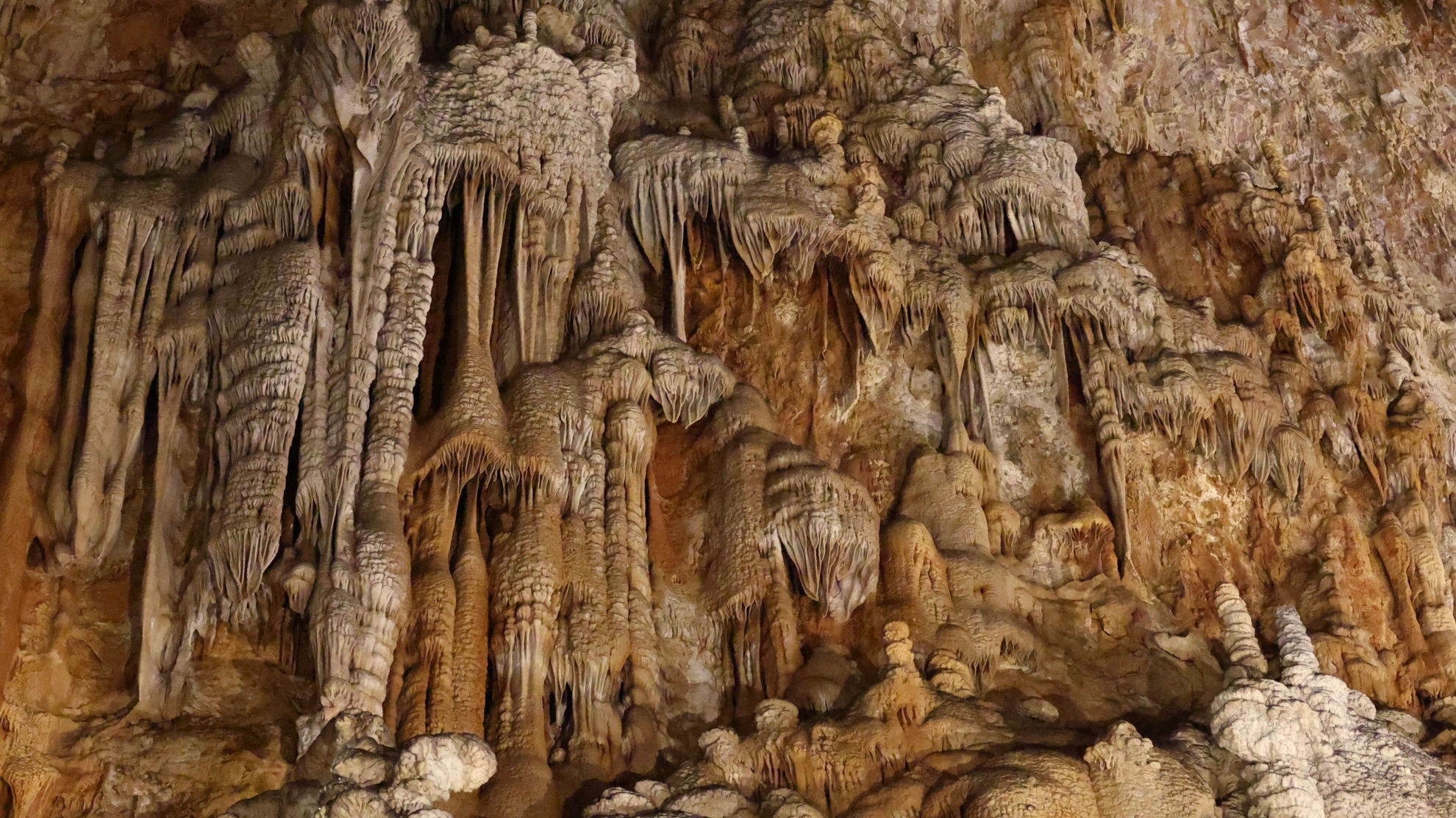
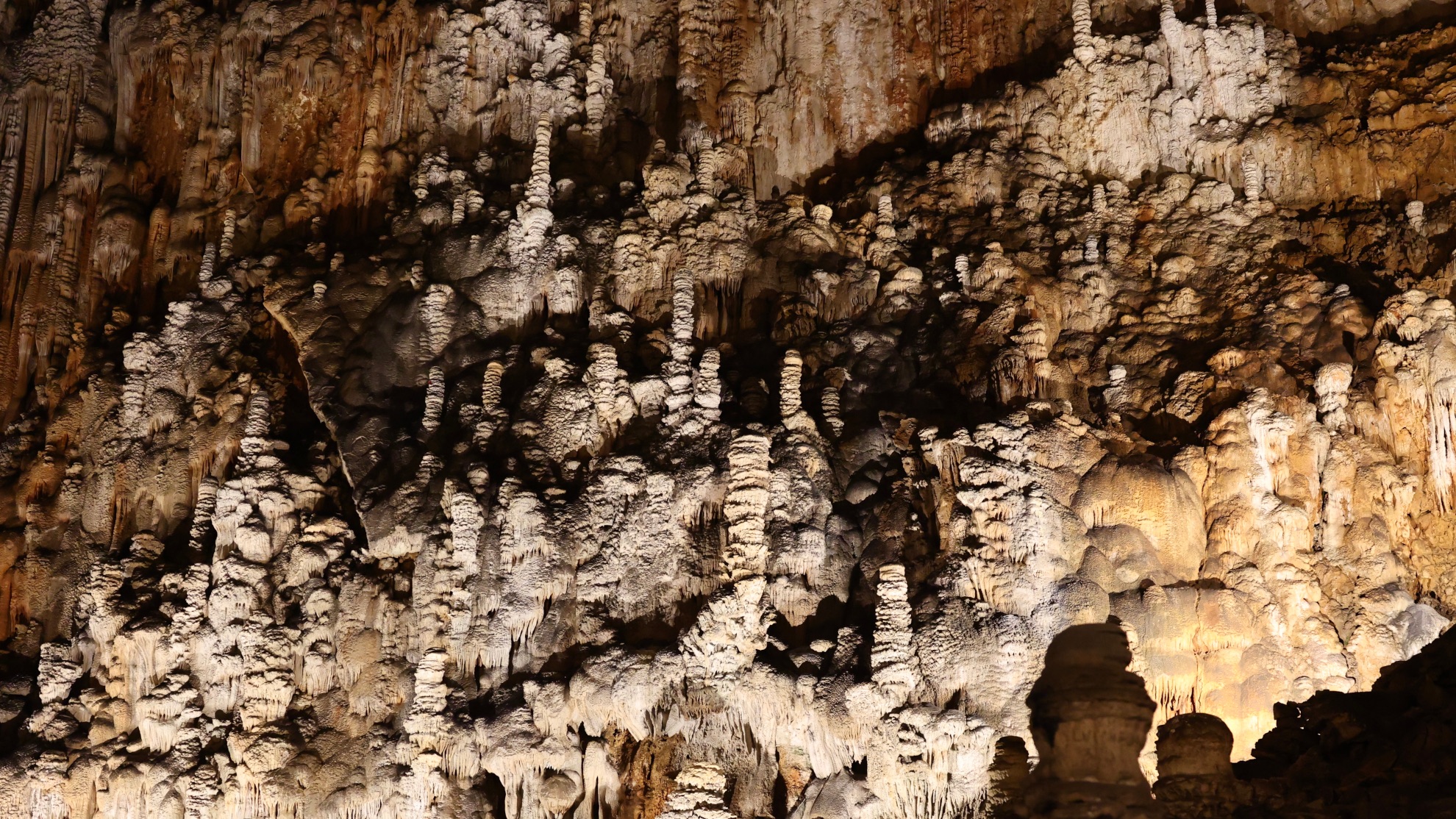
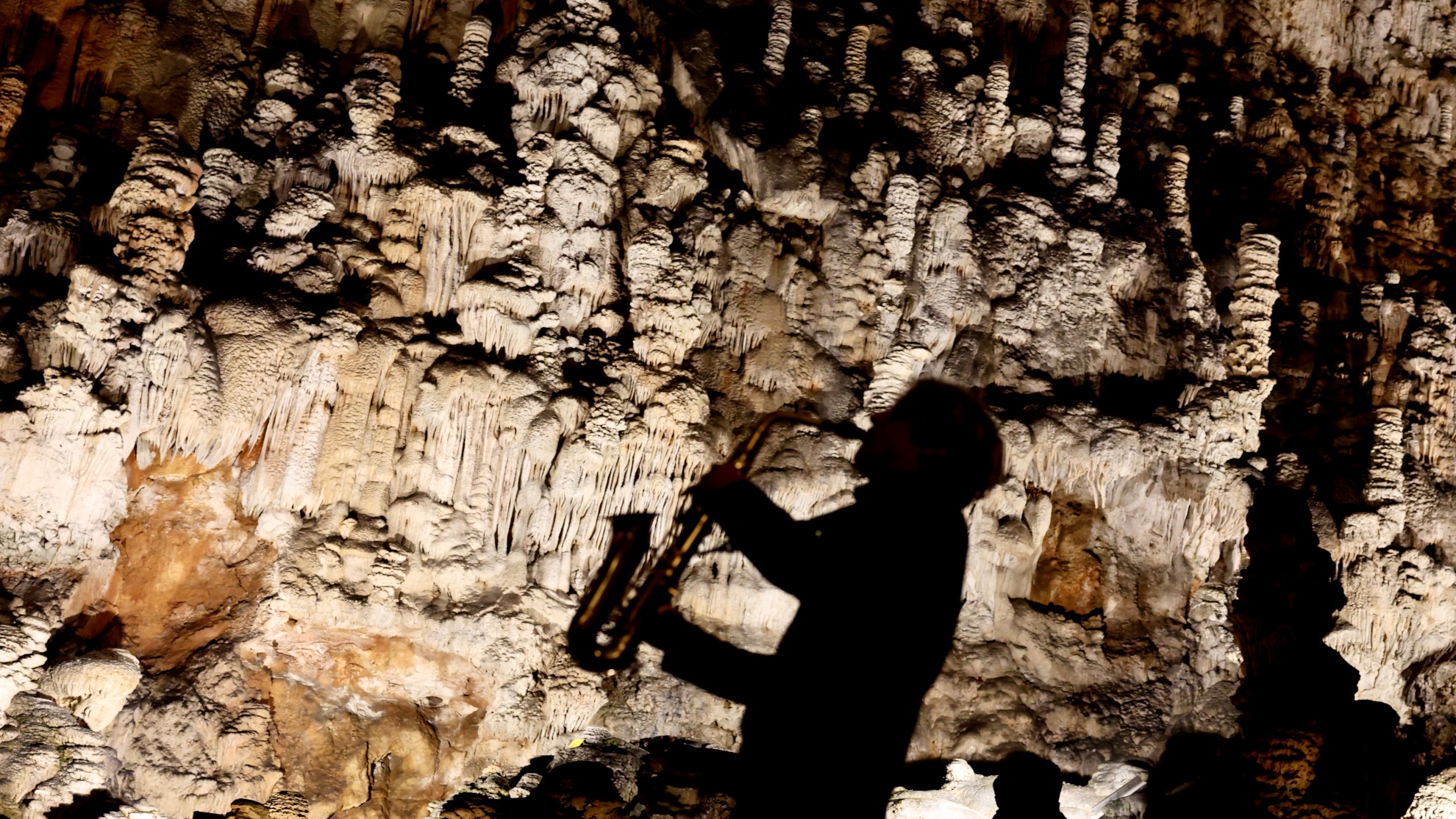
It’s not often you get to listen to rain in a cathedral! The reverberation is not particularly long, a first reflection is followed by a seven/eight-second tail with a soft, sweet and dense sound without being redundant. Unlike cathedrals, where the walls are largely marble and smooth, here the walls are full of recesses, bends, sculptures, surfaces with countless faces, roundness, and the sound doesn’t bounce uniformly, but in infinite ways, times and directions. The immense void of the cavity only amplifies its volume. Obviously all this makes very delicate sounds pleasant, while a noisy audience could make listening tiring, exhausting.
An acoustic labyrinth
When there’s no water infiltration and therefore the drops don’t fall or are very sparse, the cave’s acoustics are still impressive. Our guide defined it as “a noisy silence,” which still holds surprising peculiarities. There are points where the sound goes downward or others where you can hear the voices of people very far away as if they were just a few steps away. If there’s silence, even an infinitesimal sound can be heard from very far away, a voice in the tunnel at the exit can be distinguished very well from below, even if “blurred.”
The guides and speleologists who have worked in the cave for a long time know all these secrets well and we invite you to ask them all questions about it.
Indications
WHERE
Borgo Grotta Gigante, Sgonico, Trieste.
Parking is free and just a few meters from the entrance. It’s interesting to know that in the two steps you take to reach the ticket office (entrance is paid) you walk above the cave.
WHEN
Opening hours to the public and all information for booking the visit (booking is mandatory due to high attendance) can be found on the Giant Cave website. Needless to say, we suggest visiting the cave during periods of minimum attendance, ideally after a rainy day.
HOW / ACCESSIBILITY
Access is in groups, which can also be large, accompanied by guides. The route involves about 500 steps downward and as many upward. The visit lasts just under an hour.
Due to the steps, the route is not accessible to people with mobility disabilities; a 3D virtual visit is possible.
Comfortable shoes with rubber soles and a sweatshirt during summer are recommended, if not mandatory; the internal temperature is a constant 11 degrees year-round.
Audio recordings
Audio binaural recordings, use headphones for best results.
Important: no recording, however technically advanced, can ever render the experience of real listening. Topofonie.it is not a sound archive, but an invitation to explore the world around us with our own ears. The files reported here have only an indicative function.
Links and insights
- A description of the cave’s tourist route can be found here.
- The cave houses the world’s longest geodetic pendulums, used by the Department of Mathematics and Geosciences of the University of Trieste to monitor the imperceptible vibrations generated by earthquakes that occur even on the other side of the planet.
- The volume of the Giant Cave is about 365,000 cubic meters, it’s the world’s largest natural hall and was included in the Guinness Book of Records in 1995. In its belly it could contain St. Peter’s Basilica in Rome.
- The Giant Cave often hosts cultural and entertainment events of various kinds: concerts, shows and theatrical readings, gong baths…
The appointment with “Befana in Giant Cave” is much loved, which every January 6th attracts hundreds of spectators, with speleologists rappelling in costume from the cave’s vault.
For adults there’s the speleo experience, a journey into the depths of the earth accompanied by guides from the Speleological Guides College of Friuli-Venezia Giulia.
To receive information about initiatives, you can contact the Giant Cave and ask to subscribe to their mailing lists or WhatsApp groups.
- Guttatim is a 2014 sound art work by artist Michele Spanghero based on the acoustics of the Giant Cave. Inspired by I Am Sitting in a Room by Alvin Lucier, it exploits the cave’s reverberation to recursively amplify the sound of a water drop. Worth listening to.
- In Search of Sound Oblivion (Atlantide ed.) is a beautiful book by Harry Sword where among many things it talks about archaeoacoustics. An excerpt dedicated to the acoustics of the Hypogeum of Ħal-Saflieni on the island of Malta can be read here. Worth it.
- Link to the Giant Cave page on Wikipedia.
Acknowledgments
Cave Commission “Eugenio Boegan” (CGEB) in the person of president Aldo Fedel and all the staff of workers and volunteers of the Giant Cave.