A room for sound engineers
A reverberation chamber is a structure specially designed to produce a particularly pure and intense reverberation. The walls are made of smooth, dense materials on which sound bounces. All surfaces, including floor and ceiling, are divergent, and the slope is calculated so that sound follows nonrepetitive paths. This avoids areas of acoustic thickening and results in even reverberation throughout the room volume. In technical terms, this is called a diffuse acoustic field.
The cosmetics of sound
Reverberation is a major influence on music and to varying degrees is always present. Every instrument and every musical expression has its own ideal amount of reverb that enriches and enhances its voice. Today it is commonly added in the recording studio, but before the advent of technology it was architecture that was responsible for this “cosmetics” of sound. Music that was performed in cathedrals or monasteries could not be made or heard without the emphasis of reverb. Without reverberation, a Gregorian chant or mass would have lost its meaning and value, and since ancient times, architectures were designed with engineering artifices designed to improve or correct the acoustics for the music or functions performed there.
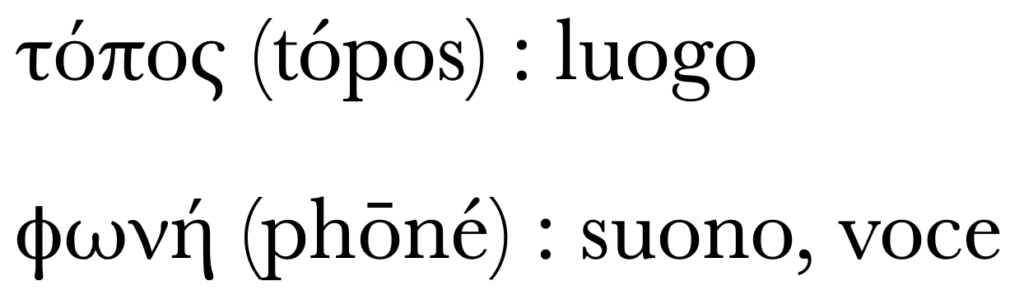
Since the human voice is one of the timbres that is best suited to a long reverberation, in order to listen to and appreciate this topophony, we invited a Gregorian music choir and a singer whom we asked to perform a short musical intervention. First, however, we measured and recorded the length of the reverb.
The balloon test
To measure the reverberation of an environment, a pulse of white noise is produced and the time it takes for the sound to fade is calculated. There are many techniques for producing a noise pulse, we for simplicity have used the old balloon method. The bursting of a balloon is sudden and has an extremely short duration, so what is heard is only the reverberation, that is, the sound energy that travels bouncing around the room until it is extinguished.
The paradox
For our hunt for exceptional sounds, a reverberation chamber has a small limitation: to hear the maximum reverberation it can produce one would have to not be in it. In fact, any presence contributes to damping the reverberation or influencing its behavior with reflections and absorption. Basically, the more objects or people there are in the room, the more the reverberation shortens.
By limiting the presence as much as possible, with a sound technician and a “balloon attendant,” in the Patt reverberation chamber we recorded a duration of about 16 seconds, which was reduced by almost half in the presence of a few people.
The acoustic well-being
In Patt ‘s reverberation chamber, Fantoni sound-absorbing panels used in the design of public spaces or where acoustics are an important element are tested.
To measure how much sound a material absorbs, the difference in reverberation duration with and without the material under test is calculated.
The importance of room acoustic design affects not only theaters or concert halls, but also more common places such as company cafeterias or restaurants or classrooms. An environment acoustically left to chance can be very uncomfortable, while on the contrary it can significantly improve the quality of life and activities of those who live in it.
Indications
WHERE
The reverberation chamber is part of the Fantoni research center and is located inside the Patt company’s plant in Attimis.
WHEN
Since this is a private space, visits must be arranged and can only take place during business hours when the plant is open.
HOW
Spazioersetti organizes visits to Patt’s reverberation chamber about twice a year. If interested please contact us.
Audio recordings
Binaural audio, headphone listening recommended.
Please note: no recording no matter how technically advanced can ever represent the experience of real listening. Topofonie.it is not an archive of sounds, but an invitation to go and listen with our own ears to the world around us. The files given here are for illustrative purposes only.


Links and insights
- For detailed research on the places with the longest reverberation in the world, see Trevor Cox’s text Sonic Wonderland / The Sound Book while for an interesting overview of the acoustics of archaeological sites we point to Harry Sword’s text Monolithic Undertow.
- Section of the Fantoni Group website devoted to research in acoustics for the development of sound-absorbing systems.
- For those who chew physics we point out the Wikipedia page on reverberation time according to Wallace Clement Sabine, the physicist who pioneered architectural acoustics studies.
- Site of the women’s choral group and Schola Gregoriana Albarosa