

Tower clocks
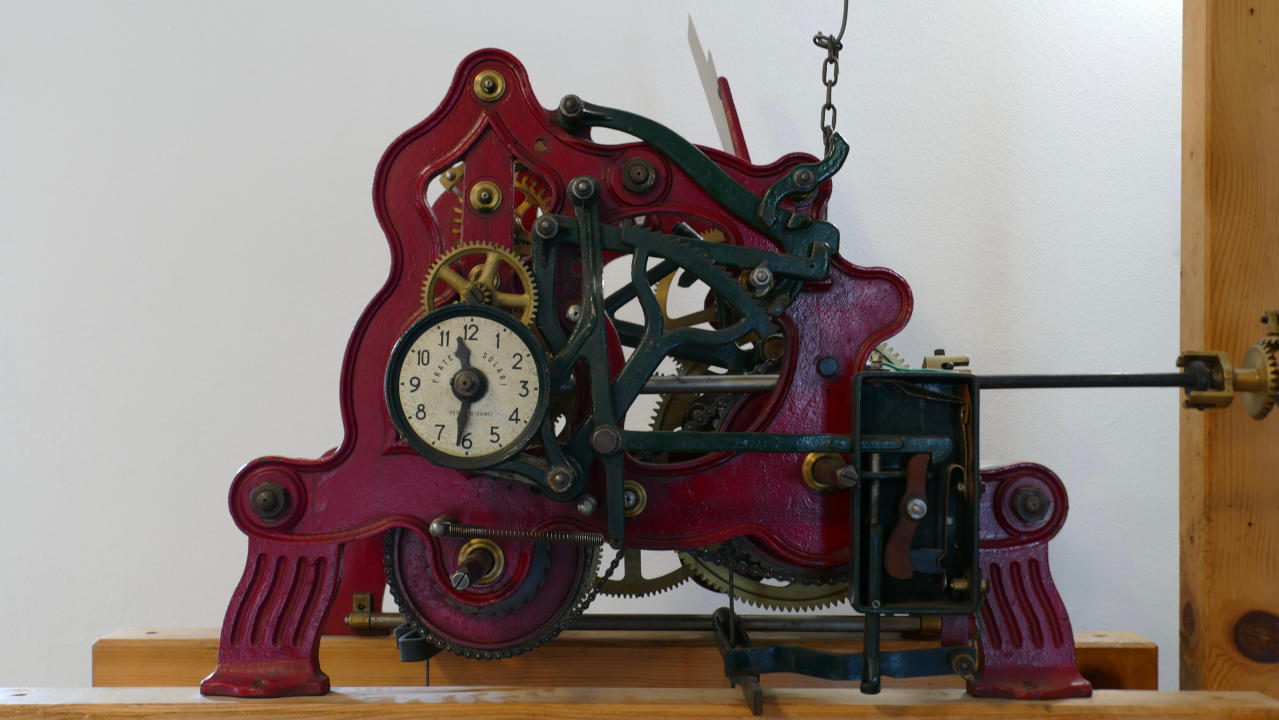
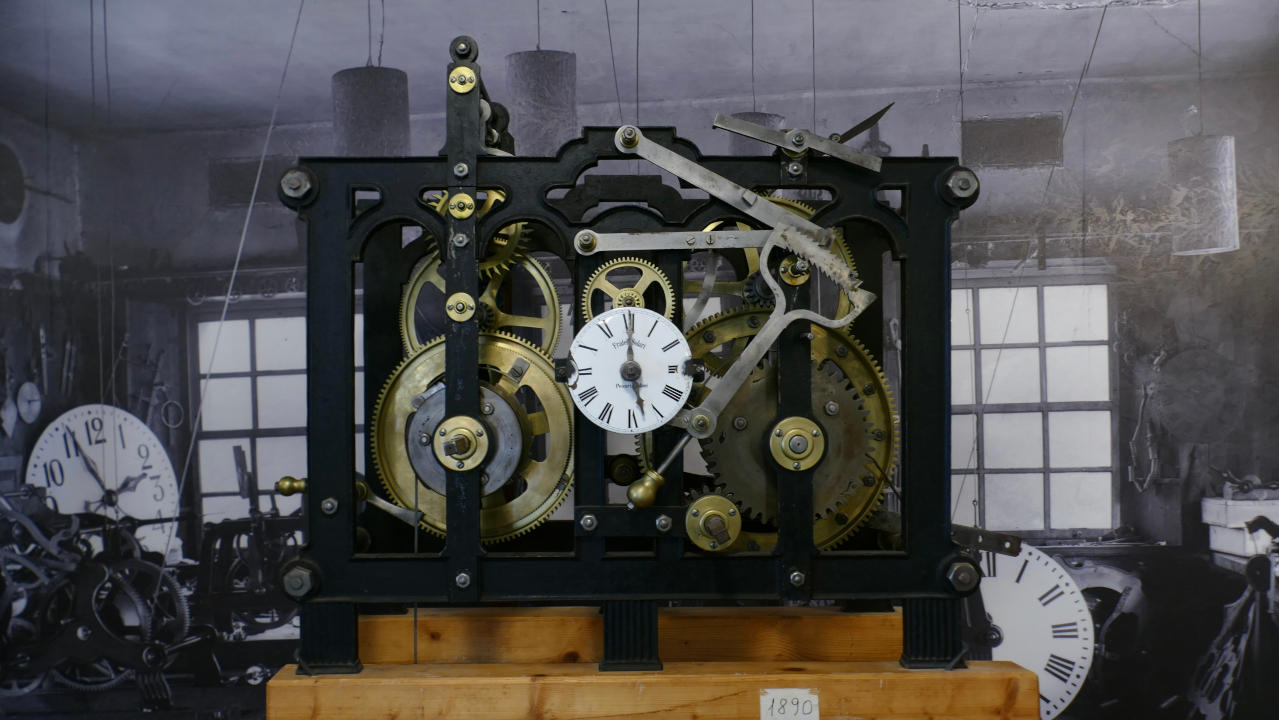
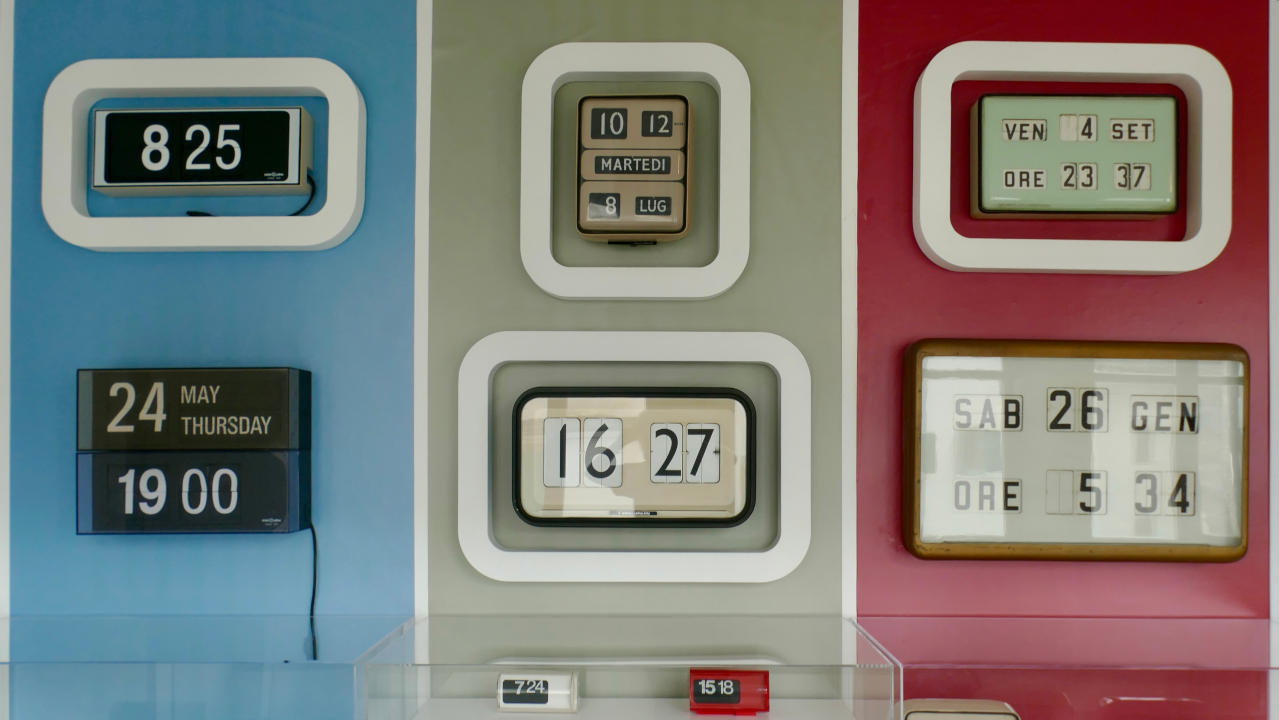
At the watchmaking museum in Pesariis there are several rooms devoted to the evolution of watchmaking technology born and developed in this valley since the 17th century. Our attention is particularly drawn to the room of tower clocks where one can hear large clocks produced during the 1800s and intended for church and palace steeples and towers.
Those familiar with the beginning of Pink Floyd’s mythical Time can vaguely imagine what one is going to hear in this topophony.
A symphony of gears
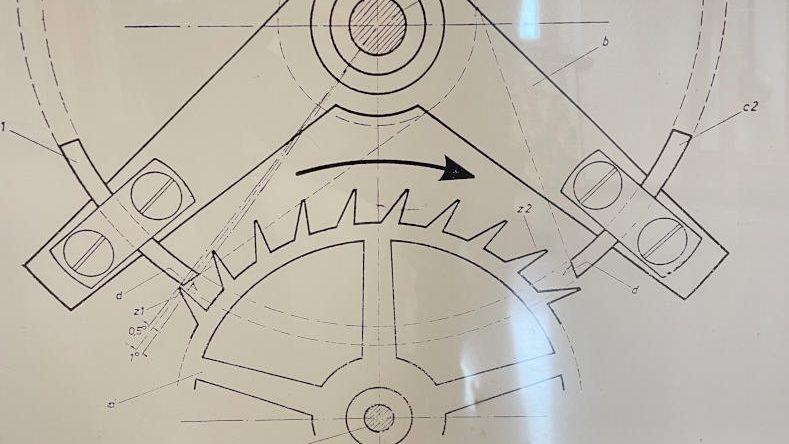
The “ticking,” the sound of these mechanical marvels is generated by the movement of the so-called “anchor escapement,” which locks and releases the rotation of the gear through the oscillation of the pendulum. In this way first of all there is an alternating sound between the seconds since they are generated from two different points of percussion between them, as if it were a succession of inhalation and exhalation.
In addition, the presence of multiple clocks in the same room, made with different characteristics, means that each machine has a unique and personal voice, as if they were tuned instruments coming together in a rich composition.
In addition to the escapement mechanism, in fact, there are the sounds of various other gears, chains, flywheels, racks, paddle brakes, the loud tolling of the bell (made by the De Poli foundry for the village church) struck by the hammer of the red clock on the stroke of the hours, and that of the reloads that museum workers have to make a few times a day by lifting stone weights with hand pulleys when the clocks stop.
Time as it once was
A surprising aspect of listening in this room is that since it deals with scanning the unit of universal time, one would expect a cold, repetitive rhythm. Instead, the sound of these clocks is warm, musical, free of the rigidity of the digital world to which we are accustomed. The paradoxical effect is that by allowing oneself to listen to these heavy and precise contraptions, one gets the impression that today’s perception of time has changed a great deal, as if these clocks go at a slower and more relaxed pace than those of today.
The sound of silence
Another fascinating sound found in the museum is that of the model alarm clock found in the hall of monastic clocks from the 1400s and 1500s.
Its peculiarity is that it strikes time not every second, but every two. Watching it oscillate with its balance wheels and listening to its sound one is mesmerized, one really gets a sense of a slow and meditative flow of time.
It seems to be the sound of silence, it gives a sense of serenity.
The music box
Pesariis also welcomes to the village the series of monumental clocks, all of which are quite striking.
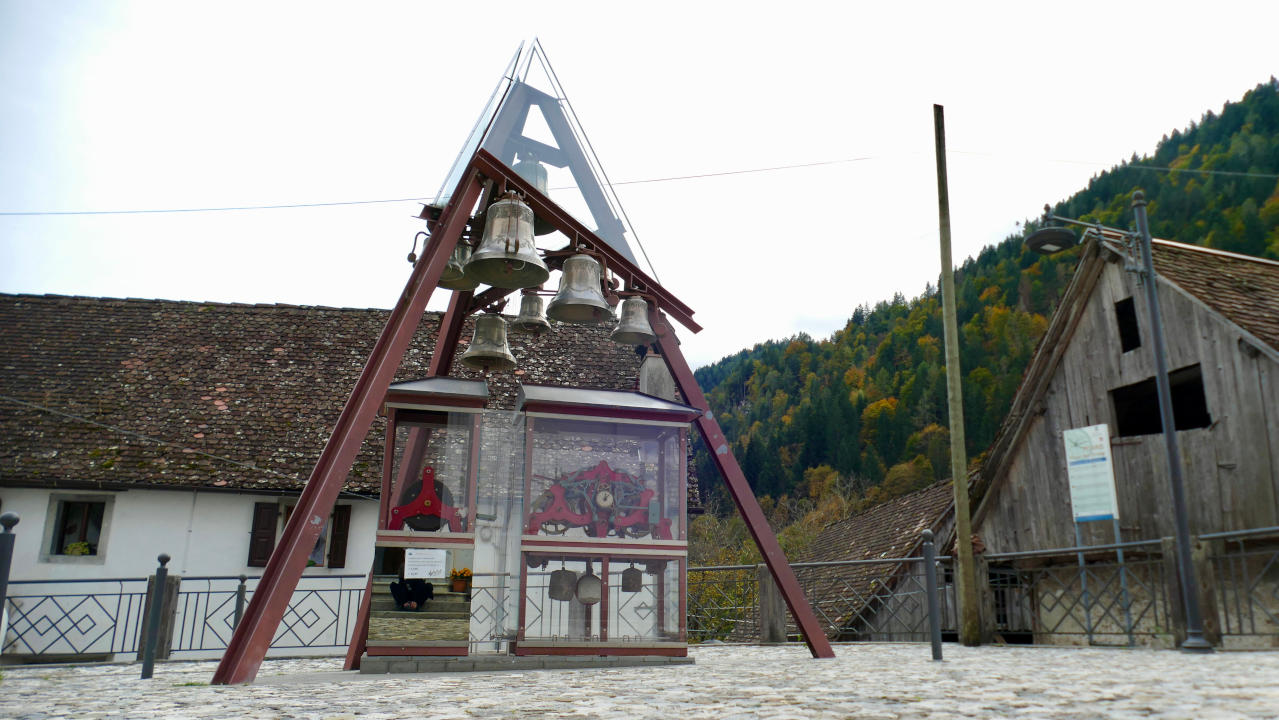
The prince of attractions is the one with carillon placed in front of the church. Twice a day, at 11:55 a.m. and 3:55 p.m., the carillon plays its melody almost always in the presence of passing tourists and onlookers.
If you have booked a guided tour you will have the privilege of listening to the manually operated carillon even at different times, an experience accompanied by the rich information on the construction, operation and maintenance of this sonic and mechanical jewel.
Directions
WHERE
In Pesariis it is easy to drive to the entrance of the village where there is a small parking lot with a giant paddle clock. After that it is necessary to continue on foot.
WHEN
The watchmaking museum is open with varying hours depending on the time of year; please consult the museum website to schedule your visit.
The carillon clock, as well as all monumental clocks are always accessible.
ACCESSIBILITY
The village has several ups and downs, but it is walk-friendly.
Due to temporary work, the museum is currently not accessible to people with mobility impairments that prevent them from climbing stairs. You are advised to contact the facility for more information.
Audio
Binaural audio, headphone listening recommended.
Please note: no recording no matter how technically advanced can ever represent the experience of real listening. Topofonie.it is not an archive of sounds, but an invitation to go and listen with our own ears to the world around us. The files given here are for illustrative purposes only.
Links and insights
- Institutional website of the Pesariis Museum of Horology
- The brochure with the route of the monumental clocks can be downloaded here.
- Site dedicated to the museums of the Pesarina Valley
- Site of the Friends of Pesaro Watchmaking.