
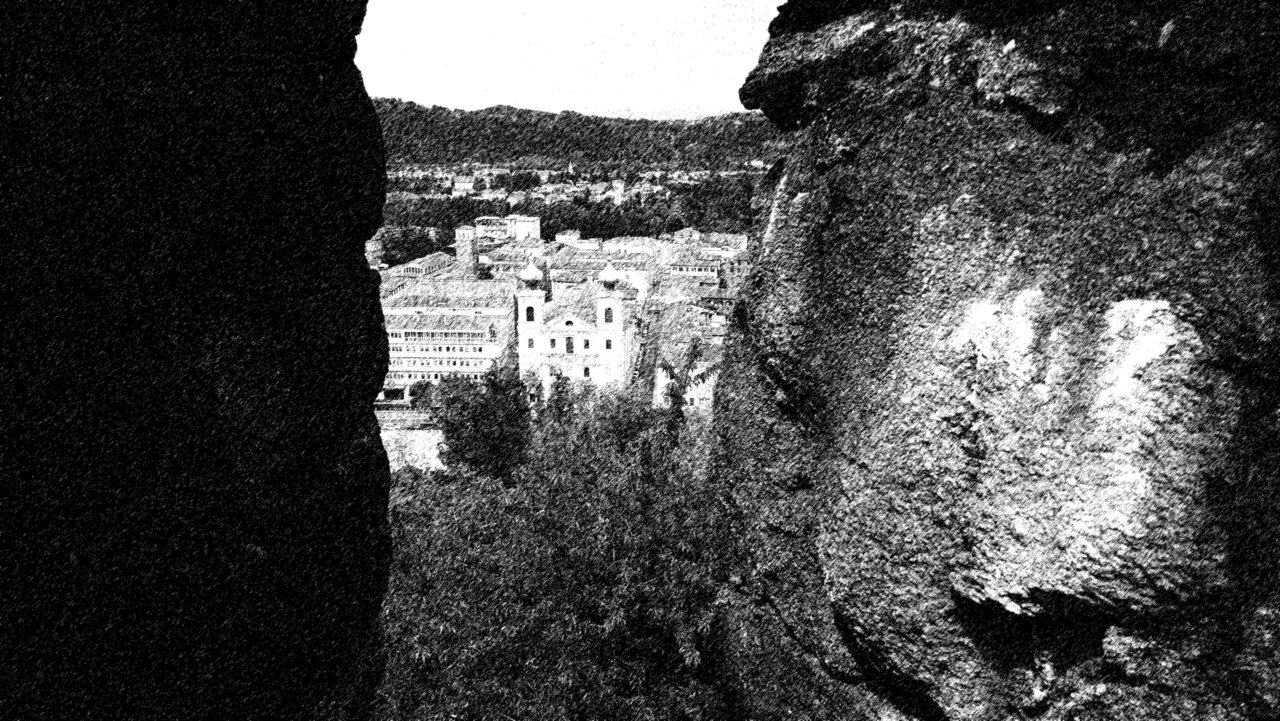
A journey through time
There would be much to say about the noon. It is time, it is history, it is geography. Over the centuries, bells marked the moments of the day, for work in the fields or to announce joyful or mournful events. They created (and still create for those who hear them) a sense of community and belonging. Noon is a journey through time.
The sound of noon
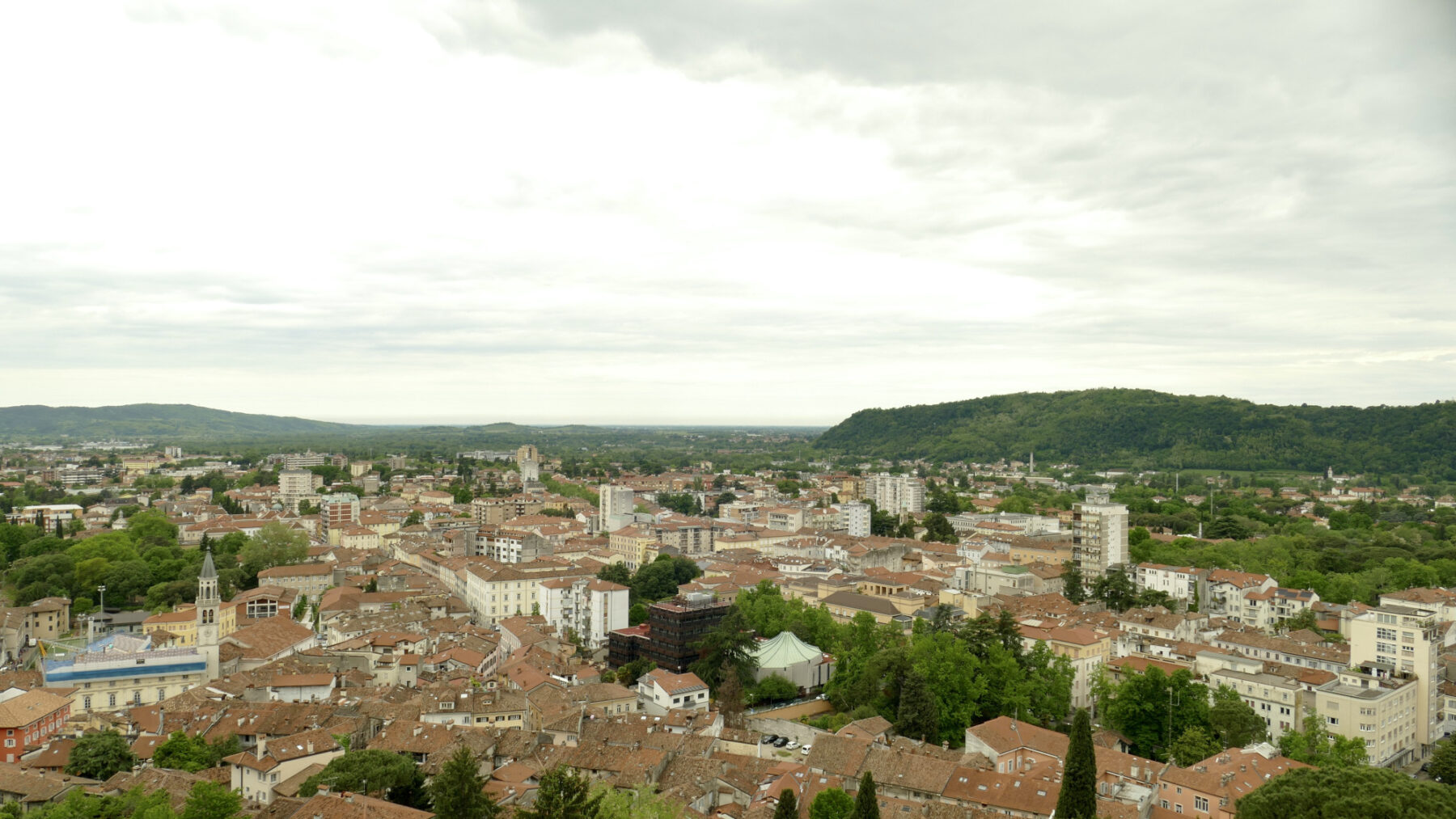
Without delving into the characteristics and richness of the sound of bells, we like to point out this little gem that is the sound of noon heard from the hill of Gorizia Castle.
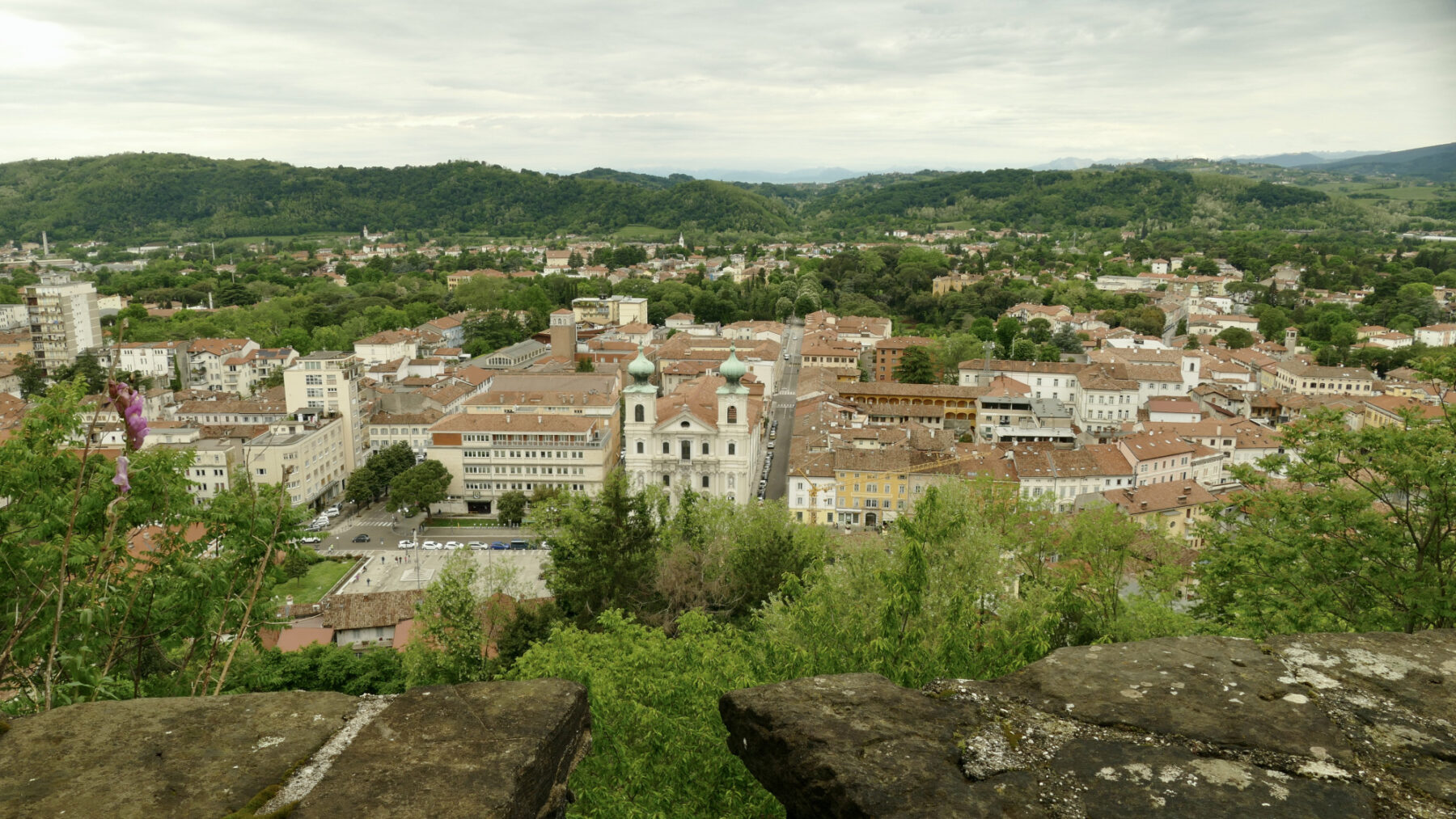
From above you can hear all around you the bells of the town and Slovenian villages ringing together for a few moments.
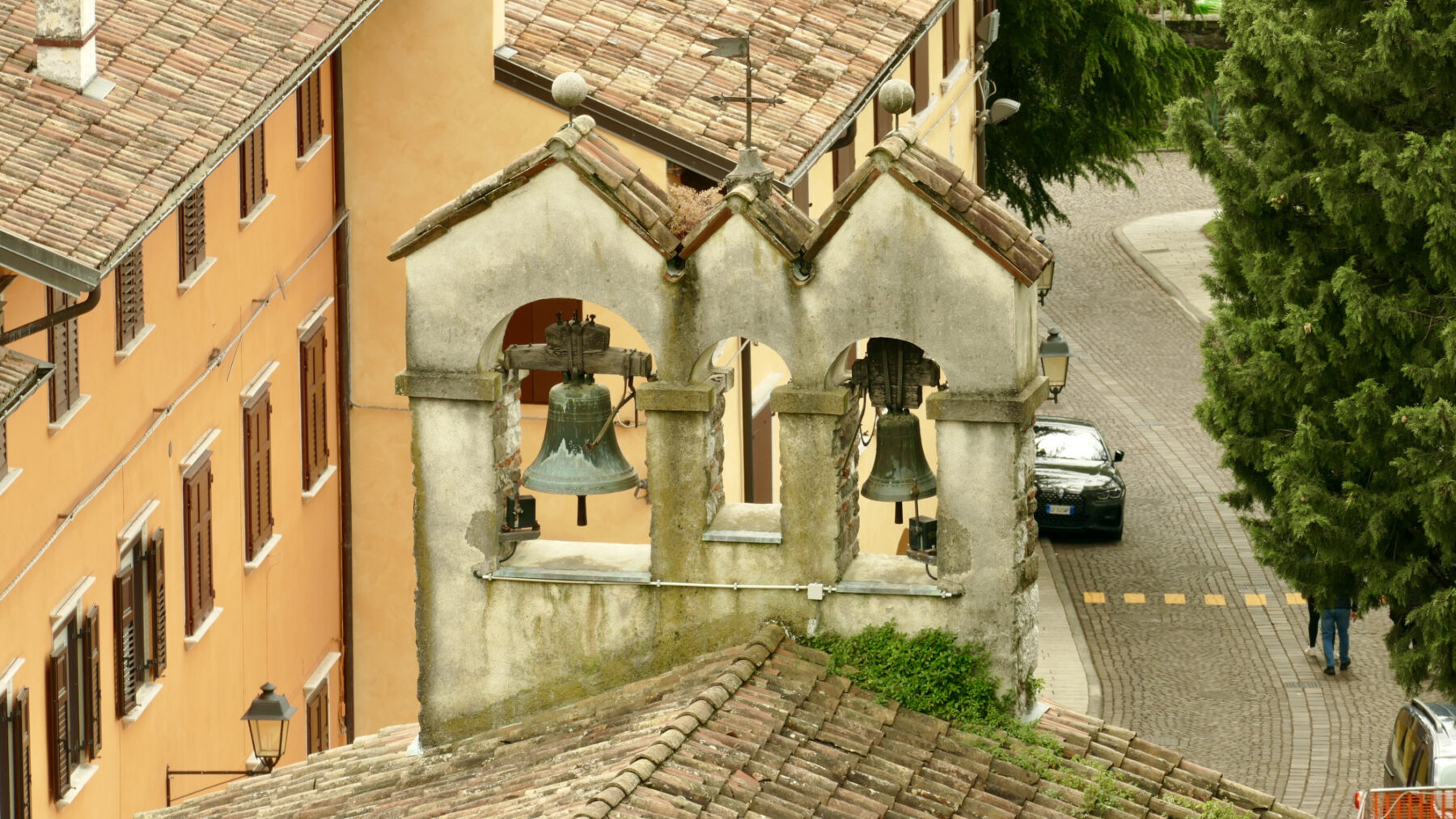
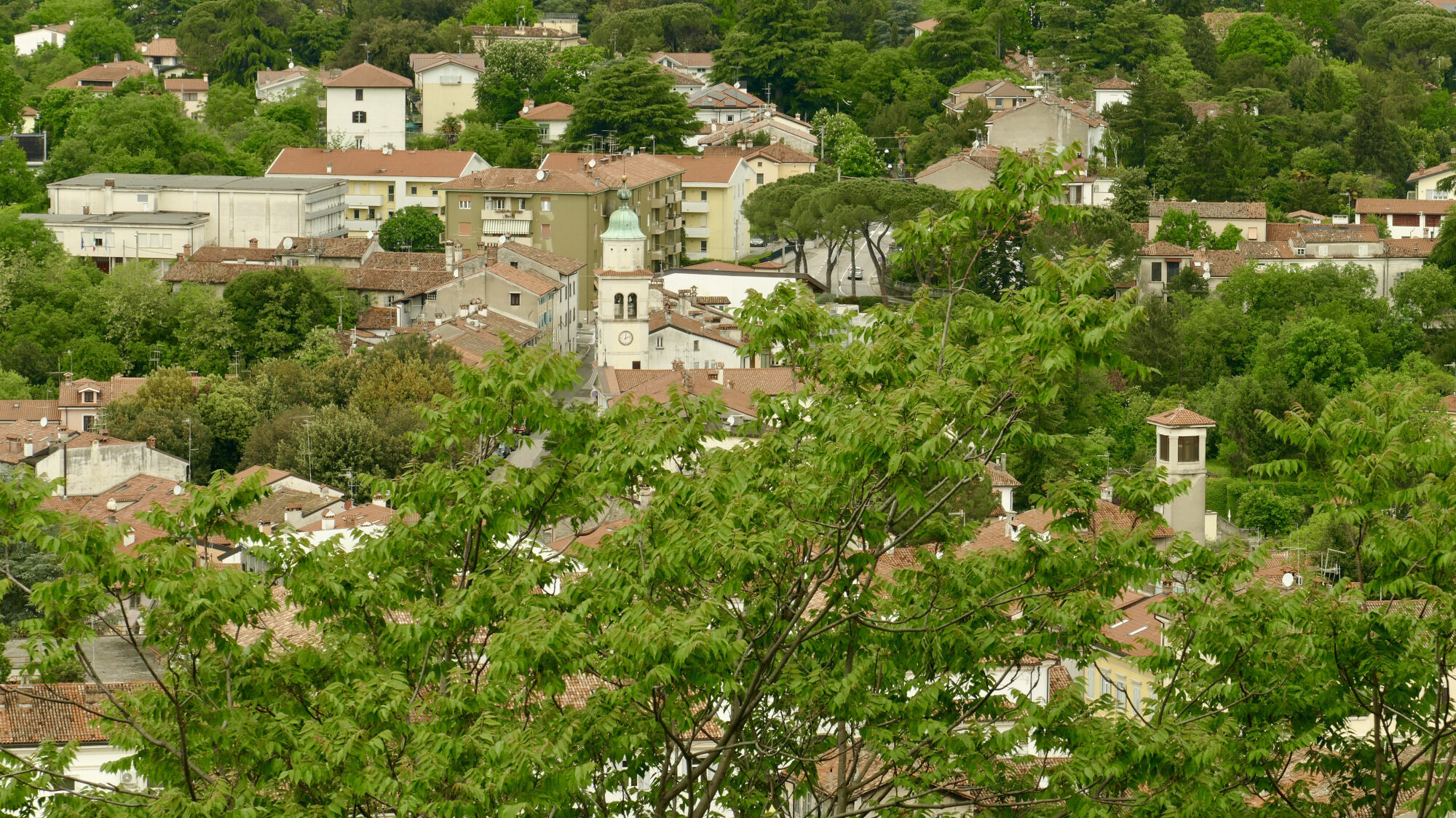
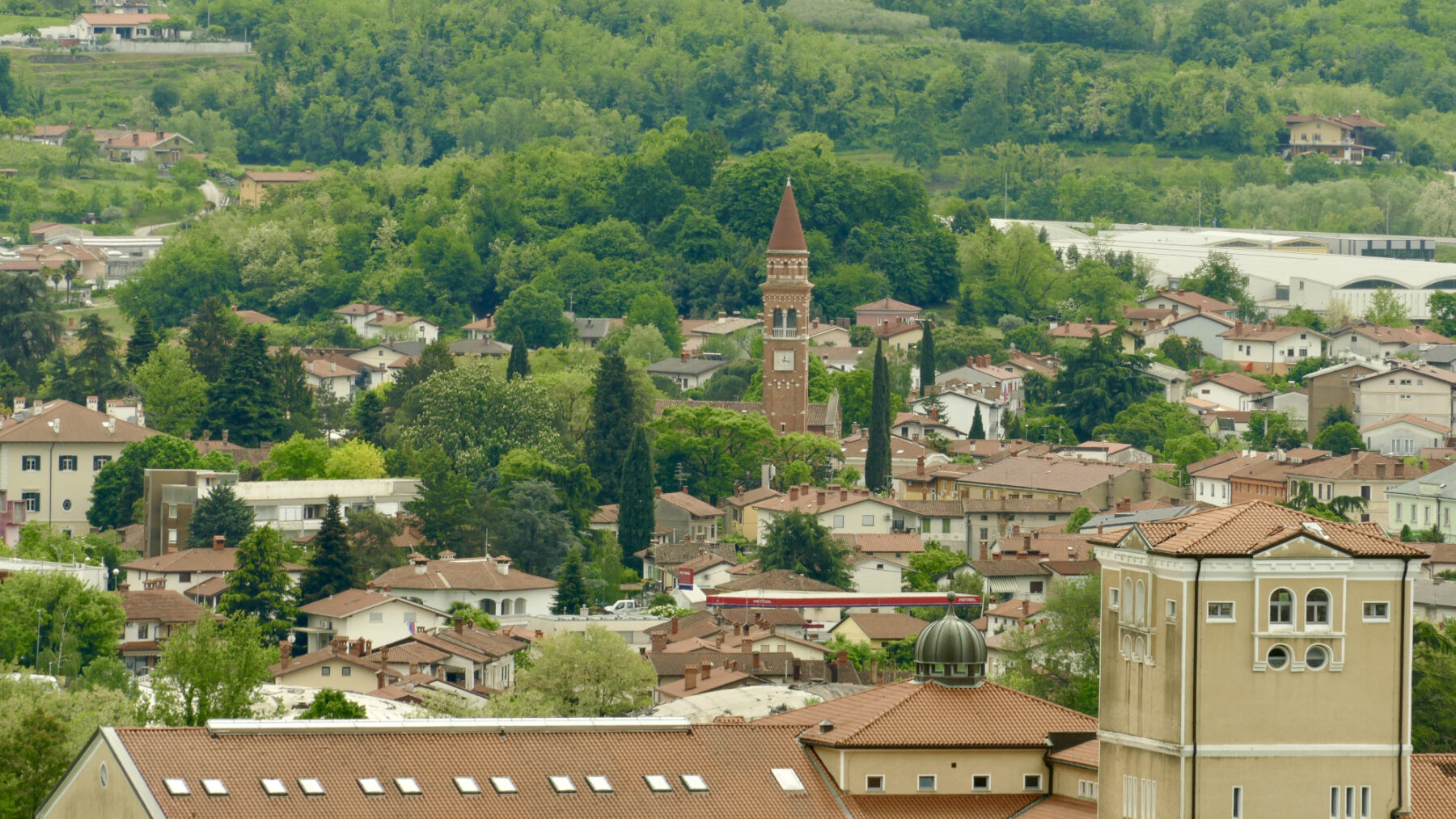
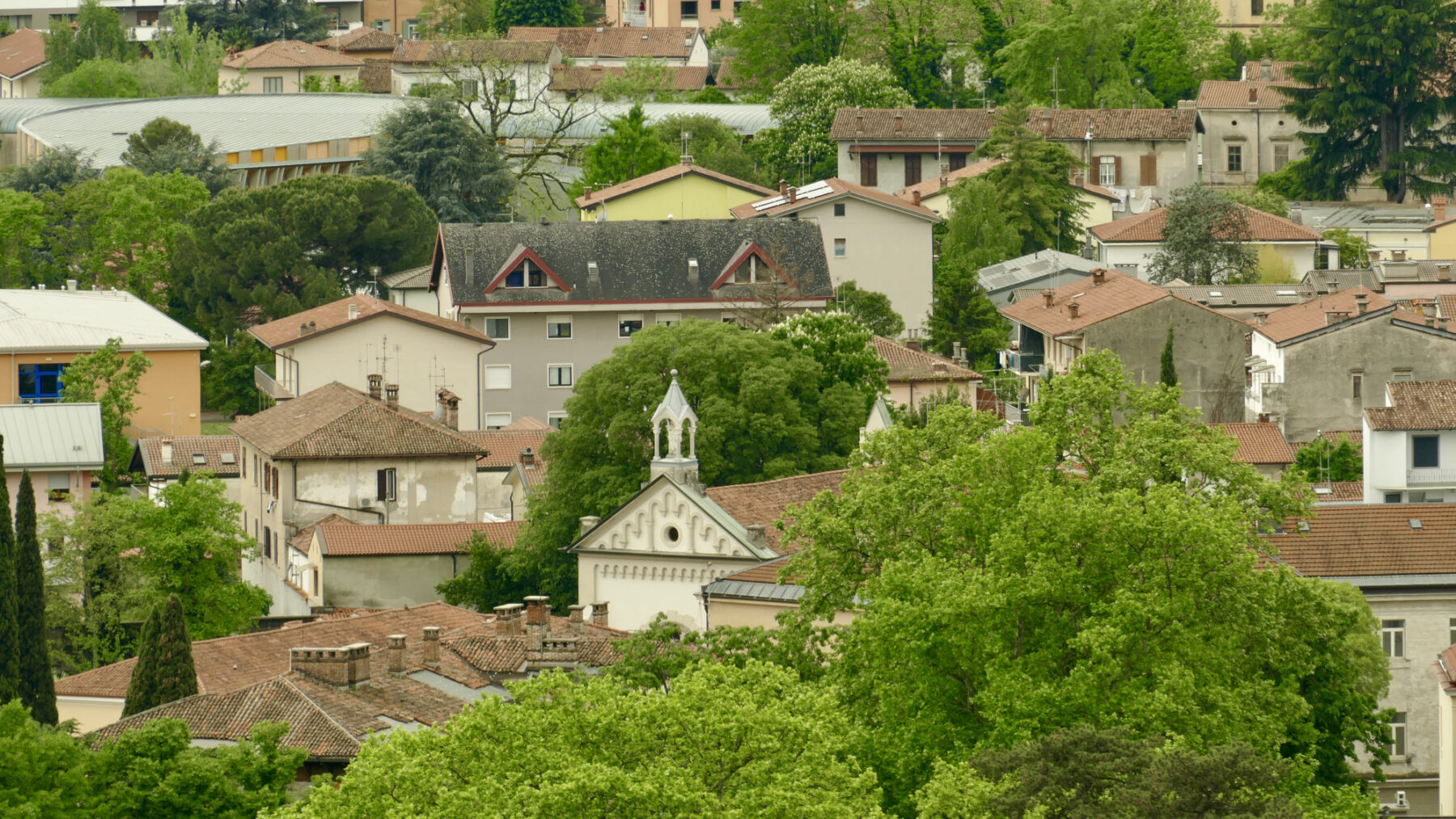
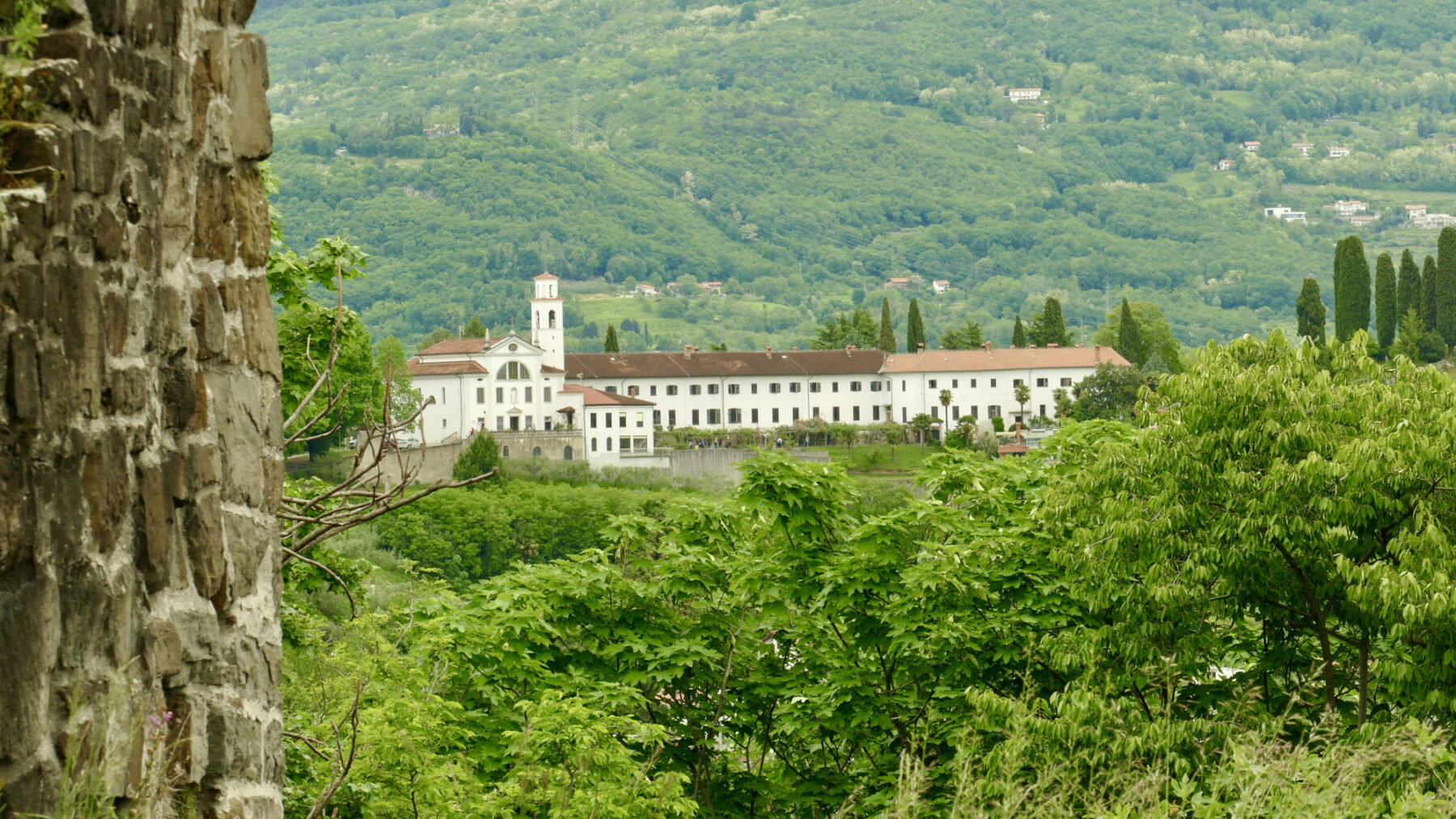
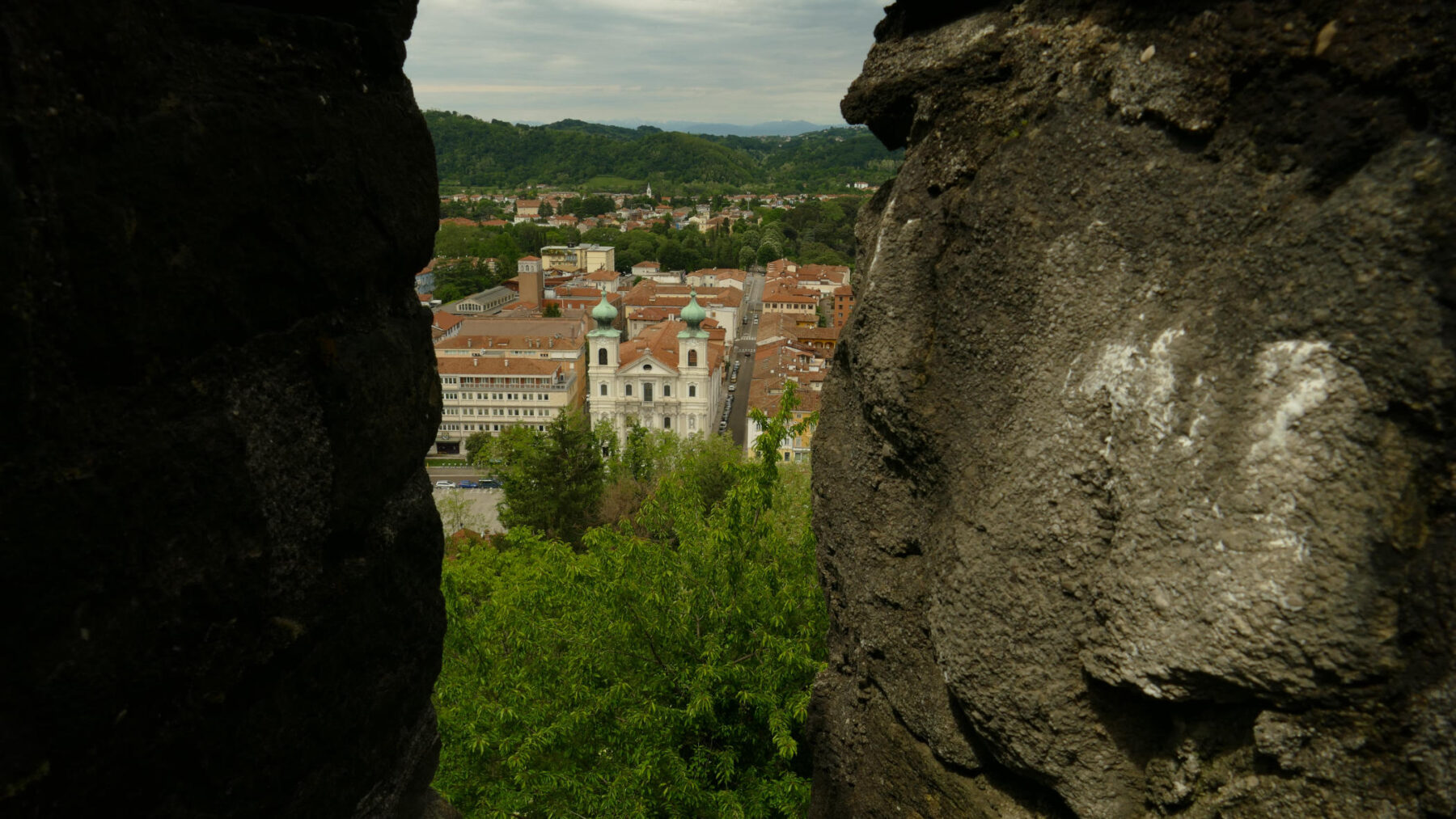
The bell tower of St. Ignatius and that of the cathedral naturally predominate, but listening deeper, here appear St. Rocco, St. Anthony Small, and the two graceful bells of St. Antonio Nuovo, and then the bell tower of St. Peter in Slovenia, St. Joseph, Piedimonte or St. Just Martyr across the Soča, the bell tower of the monastery of Castagnevizza, the church of Saints Vito and Modesto…
The sounds of the panorama naturally change according to the humidity of the air and direction of the wind, who knows, under the right conditions, as far as what bell tower you can hear.
A soundscape
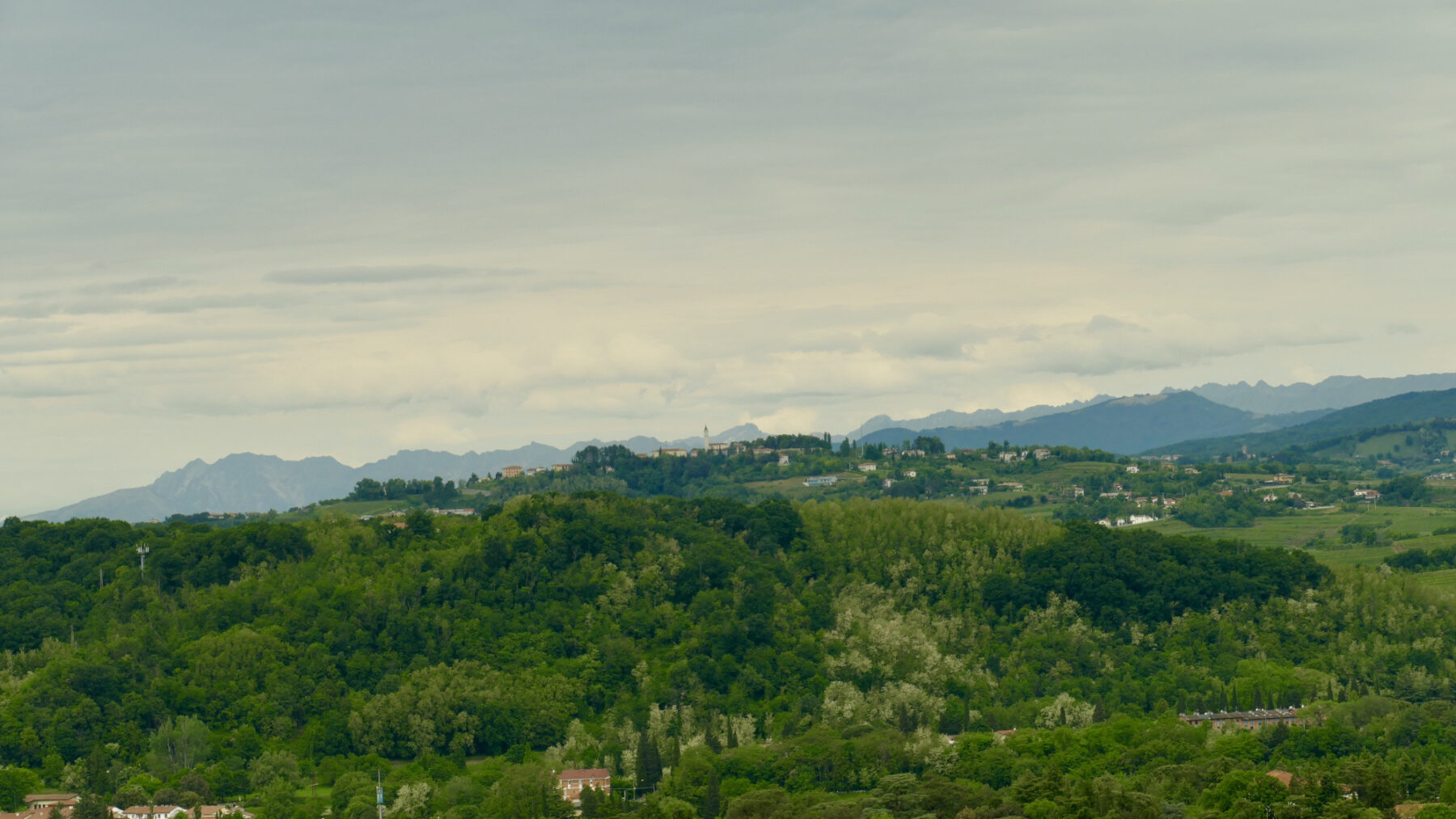
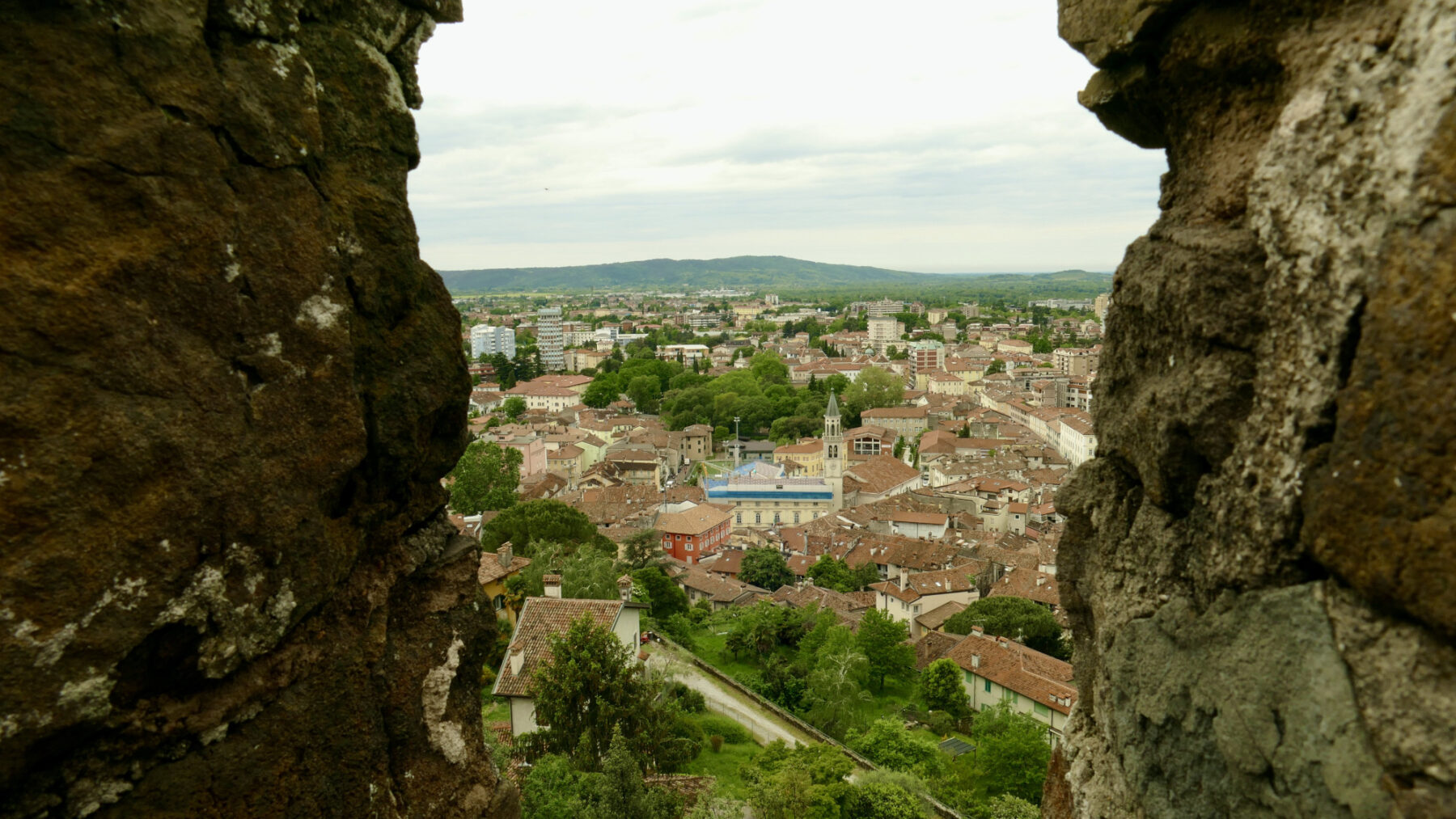
The view and sound are panoramic, practically 360 degrees even though no bell is placed to the northeast. Ideal places for listening are, of course, the lookout post on the turret facing southwest, the only one accessible to the public that is, however, rather busy. Better acoustic perspectives are from the meadow below, or from the usually quieter and more secluded King’s Observatory, which looks toward the forest.
Churches and factories
If you are at the site on the first Saturday of each month you should know that at noon it is customary in Slovenia to rehearse the warning systems to keep them efficient in case of need. Here then join the sound of bells the sound of factory sirens and that of the Nova Gorica fire brigade echoing in the air and among the hills from afar. They seem to be one sound, but if one listens carefully the tails and the beginning are out of phase, like a multiple echo, a sign that the warning sirens have a unique and equal sound. Their sound is loud and eerie, but it soon decays and gives way again to the voice of the bell towers, which one by one decay with their long tail of reverberation bringing us back into the hubbub in various languages of the tourists who frequent the place.
Directions
WHERE
In the area of Gorizia Castle Hill there are several listening points.
WHEN
Every day at noon. On the first Saturday of each month, always at noon, the sound of sirens from Slovenia can be heard in addition to the bells.
ACCESSIBILITY
Gorizia Castle has a small free parking lot beyond the Porta Leopoldina. If it is not tourist-dense days you are also likely to find space easily. Not all listening spots are wheelchair accessible and the paths are uphill, but you get there without steps all the way to the entrance of the Museum of the Middle Ages in Gorizia.
Audio
Binaural audio, headphone listening recommended.
Please note: no recording no matter how technically advanced can ever represent the experience of real listening. Topofonie.it is not an archive of sounds, but an invitation to go and listen with our own ears to the world around us. The files given here are for illustrative purposes only.


Links and insights
- Available on the Libreria Musicale Italiana website is the volume Il canto della campane – Una tradizione musicale dell’alto Adriatico by Claudio Montanari. It is a most generous work, a collection of scores, photographs, testimonies and audio and video recordings, a passionate journey into the world of bells and bell ringers of the Upper Adriatic of rare completeness and definition. The multimedia materials (without captions) can also be accessed free online.
The account of …
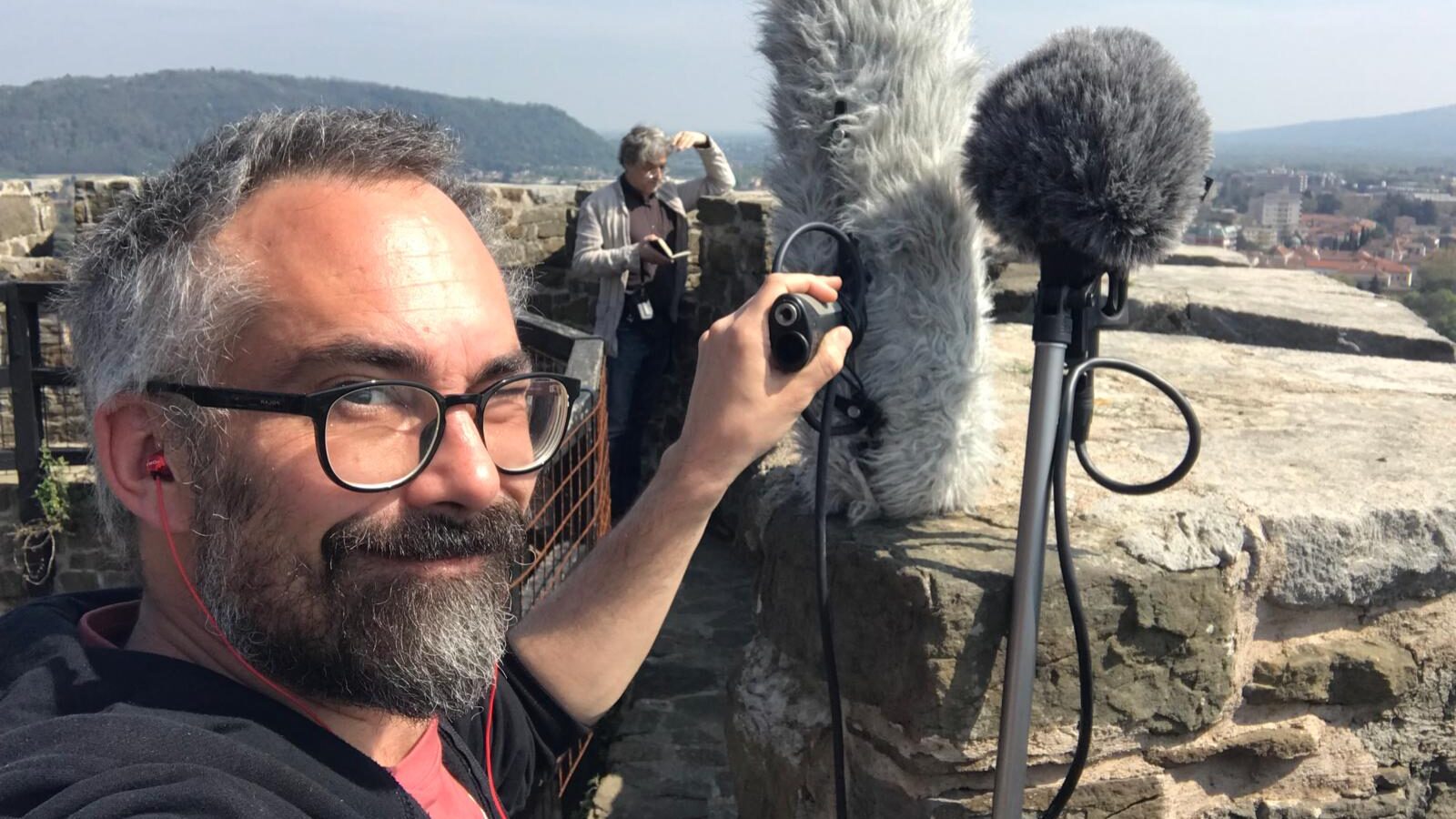
We were fortunate to have as our cicerone for this topophony a master in the field of bells: Claudio Montanari. We reproduce below his account of the day.
Gorizia, April 7, 2024 in the morning at 11:30 a.m.
On the Castle of Gorizia tourists go and walk in company, accompanied by tour guides.
The guides explain about the magnificence of the Castle and the splendor that the city has had.
I look at Gorizia from the keep facing south. And one by one the bell towers stand out, also equally important to the city of Gorizia but unremarkable.
The bell towers and bells are there, a reminder that there was a time when the work and life of the city was regulated by the rhythm determined by the sound of bells. Among the sounds that always governed the city both on work days and holidays was noon.
Still we have the opportunity to listen to this sound as a testimony to a human history of the city of Gorizia.
To listen to noon is to immerse oneself in the life of the city.
Because in life the spectacle is always, noon represents a document in the history of listening.
The Siren of Gorizia
Thus, on Sunday we recorded “Noon” in Gorizia.But if at the twelve o’clock recording we make it on a weekday, here another sound intervenes: the Siren.
This sound comes from New Gorizia. The new city was conceived designed and realized in the early postwar period as a result of the border imposed by reasons of state.
The city was conceived as a function of a new way of life: an island of factories and places to sleep in order to live on work days. The Siren would terminate work. Work ended and leisure time took over. This scanning of time was typical and functional to the new methodology of work: workers, clerks and managers, are the architects of the productive reality of consumption.
In contrast, old Gorizia was the repository of a labor reality that came from the Renaissance, characterized by the arts and crafts: carpenters, blacksmiths, weavers, stonemasons, etc.
Artisans who had the store below and the home above: the store allowed for work with other use of time, since customers had to be accommodated.
The scanning of time determined by the ringing of bells made it possible to impose on daily living, a rhythm that was found to be in sync with the course of the Sun.
In contrast, the Siren found herself the creator of a precise and linear measurement of time: this was the new world, the subverted modernity.
Thus, that renaissance that has come down to the present day, with bells pivotal to a way of identifying “everyday and festive” sound, represents a time of listening of great importance. The siren and modern time have determined another approach to living that is precise and measured, but which are now degraded to past time. Both of these sounds: the bells, the siren constitute a sound “monument” document that everyone can enjoy listening to.
Claudio Montanari